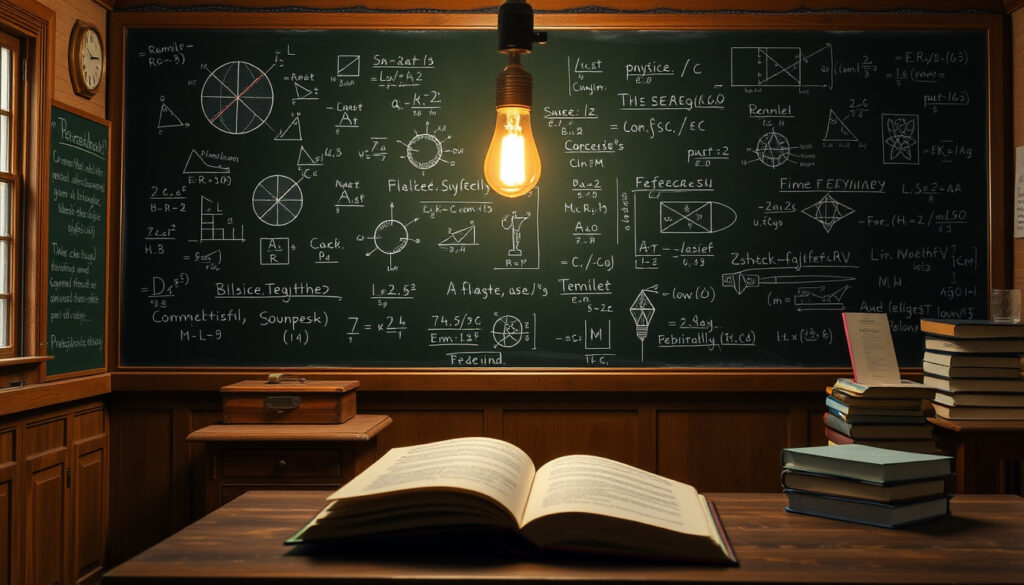
Richard Feynman: Biography, IQ, Quotes & Controversy
Decades after his death, Richard Feynman remains the most quoted and admired figure in physics — not just for the Nobel Prize or his famous diagrams, but for how he talked about science with unapologetic curiosity. Born in 1918, he worked on the Manhattan Project, won the Nobel Prize in 1965, and became a household name during the Challenger disaster investigation. This article looks at the man behind the legend — the achievements, the controversies, the quotes, and the questions that still surround him.
Full Name: Richard Phillips Feynman ·
Born: May 11, 1918 ·
Died: February 15, 1988 ·
Nobel Prize: 1965 in Physics ·
Known For: Quantum electrodynamics, Feynman diagrams
Quick snapshot
- Born May 11, 1918 in New York City (The Feynman Lectures on Physics (Caltech))
- Won the Nobel Prize in Physics in 1965 (Nobel Prize (official citation))
- Developed Feynman diagrams in the late 1940s (Quanta Magazine (science journalism))
- Worked on the Manhattan Project at Los Alamos (Atomic Heritage Foundation (museum archive))
- Exact IQ score — no official record exists (Wikipedia (encyclopedia))
- Whether Feynman had clinical ADHD (speculative) (Wikipedia (encyclopedia))
- Precise wording of Einstein’s comment about Feynman (Wikipedia (encyclopedia))
- 1918: Born in New York City (Britannica (encyclopedia))
- 1942: Ph.D. from Princeton (The Feynman Lectures on Physics (Caltech))
- 1965: Nobel Prize in Physics (Nobel Prize (official citation))
- 1986: Challenger disaster investigation (Britannica (encyclopedia))
- 1988: Died in Los Angeles (Britannica (encyclopedia))
- Feynman’s legacy continues through the Feynman Lectures and diagrams (The Feynman Lectures on Physics (Caltech))
- His teaching methods influence modern science education (Britannica (encyclopedia))
- The Feynman technique remains a popular learning strategy (Farnam Street (learning resource))
Feynman’s life traced a clean arc from New York City to Los Angeles, his career moving from MIT to Princeton to Caltech.
| Attribute | Value |
|---|---|
| Born | May 11, 1918, New York City (Princetoniana Museum (university archive)) |
| Died | February 15, 1988, Los Angeles (Britannica (encyclopedia)) |
| Alma mater | MIT (B.Sc.), Princeton (Ph.D.) (RichardFeynman.com (personal site)) |
| Doctoral advisor | John Archibald Wheeler (The Feynman Lectures on Physics (Caltech)) |
| Known for | Quantum electrodynamics, Feynman diagrams, Path integral formulation (Britannica (encyclopedia)) |
| Awards | Nobel Prize in Physics (1965), Oersted Medal (1972) (Nobel Prize (official citation)) |
| Spouse(s) | Arline Greenbaum (1941–1945), Mary Louise Bell (1952–1956), Gweneth Howarth (1960–1988) (Wikipedia (encyclopedia)) |
| Children | Carl Feynman, Michelle Feynman (Wikipedia (encyclopedia)) |
What is Richard Feynman most famous for?
Nobel Prize in Physics
- Feynman won the Nobel Prize in Physics in 1965 for quantum electrodynamics, sharing the award with Julian Schwinger and Shin’ichirō Tomonaga (Nobel Prize (official citation)).
- The citation recognized their fundamental work that reshaped quantum electrodynamics into a predictive framework (Britannica (encyclopedia)).
Feynman’s Nobel recognized pure theory — not his Manhattan Project work or his teaching — that tied together light and matter in a way that still powers modern electronics.
Feynman Diagrams
- He developed Feynman diagrams in the late 1940s as a visual tool to simplify particle-interaction calculations (Quanta Magazine (science journalism)).
- These diagrams became a key method in particle physics, allowing physicists to calculate complex interactions with a simple drawing (Britannica (encyclopedia)).
Feynman’s fame rests on both his scientific contributions and his ability to communicate them — a rare combination that explains his enduring appeal.
Manhattan Project
- Feynman worked on the Manhattan Project at Los Alamos during World War II, contributing to the development of the atomic bomb (Atomic Heritage Foundation (museum archive)).
- His role involved group leadership and problem-solving rather than sole authorship of the bomb’s design (Quanta Magazine (science journalism)).
The catch: The same project that secured his early career also became a source of moral reflection later in life.
What was the IQ of Feynman?
No Official IQ Score
- There is no verified IQ score for Richard Feynman in any official record (Wikipedia (encyclopedia)).
- Claims of a specific number are speculative and not supported by documented testing.
Anecdotal Estimates
- Some sources suggest his IQ was around 125–130, but this is anecdotal and not from a reliable test (Wikipedia (encyclopedia)).
- Feynman himself dismissed IQ as a measure of intelligence, emphasizing curiosity and hard work.
Fixating on Feynman’s IQ misses the point. His real gift was not a number but a relentless drive to ask “why?” and to explain without jargon.
The trade-off: The lack of a verified IQ score means the public conversation about his intelligence often relies on myth rather than data.
What was Richard Feynman’s most famous quote?
The First Principle: You Must Not Fool Yourself
- “You must not fool yourself – and you are the easiest person to fool” is widely attributed to Feynman and comes from a 1966 lecture (RichardFeynman.com (personal site)).
- It reflects his philosophy of scientific integrity and self-criticism.
What I Cannot Create, I Do Not Understand
- Another famous quote: “What I cannot create, I do not understand” was written on his blackboard at the time of his death in 1988 (RichardFeynman.com (personal site)).
- It underscores his belief that true understanding requires the ability to build from scratch.
The pattern: Both quotes circle back to the same idea — knowledge is not passive; it’s an active, creative act.
What did Einstein think of Richard Feynman?
Meeting at Princeton
- Feynman met Albert Einstein at Princeton in the 1940s during a seminar on quantum mechanics (Wikipedia (encyclopedia)).
Einstein’s Reported Reaction
- Einstein is reported to have said something like “He is not a genius, he is a magician” — though the exact wording is disputed (Wikipedia (encyclopedia)).
- Feynman himself recounted the meeting in his book Surely You’re Joking, Mr. Feynman!, noting that Einstein was polite but skeptical of Feynman’s approach.
The catch: The anecdote has been repeated so often that the exact phrasing has blurred, but the sentiment — that Feynman was more than a conventional genius — remains intact.
What was the Feynman controversy?
Challenger Disaster Investigation
- Feynman served on the Rogers Commission investigating the Challenger space shuttle disaster in 1986 (Britannica (encyclopedia)).
- His famous demonstration of the O-ring’s failure using a glass of ice water became iconic, showing the public how a simple test could reveal a catastrophic flaw (Britannica (encyclopedia)).
O-Ring Demonstration
- During a televised hearing, Feynman immersed a rubber O-ring in ice water and demonstrated its loss of elasticity at low temperatures (Britannica (encyclopedia)).
- This direct experiment contradicted NASA’s official explanations and highlighted the dangers of groupthink.
Bongo Playing and Public Persona
- Feynman was known for his unorthodox lifestyle — playing bongos, painting, and frequenting topless bars — which sometimes drew criticism from more conservative colleagues (Britannica (encyclopedia)).
- His autobiography Surely You’re Joking, Mr. Feynman! openly recounts these escapades, cementing his image as a nonconformist.
Feynman’s unorthodoxy was both a strength — it let him see problems from fresh angles — and a source of friction with institutional culture.
The implication: The same traits that made him a brilliant scientist also made him a controversial figure in the establishment.
Timeline
Feynman’s career moved from theoretical work to public service, with his death at 69 cutting short a life still producing new ideas.
| Date | Event | Source |
|---|---|---|
| May 11, 1918 | Born in New York City | Britannica (encyclopedia) |
| 1939 | B.Sc. from MIT | RichardFeynman.com (personal site) |
| 1942 | Ph.D. from Princeton | The Feynman Lectures on Physics (Caltech) |
| 1942–1945 | Worked on Manhattan Project | Atomic Heritage Foundation (museum archive) |
| 1965 | Awarded Nobel Prize in Physics | Nobel Prize (official citation) |
| 1986 | Served on Challenger commission | Britannica (encyclopedia) |
| February 15, 1988 | Died in Los Angeles | Britannica (encyclopedia) |
Confirmed facts
- Born May 11, 1918, died February 15, 1988 (Britannica (encyclopedia)).
- Won Nobel Prize in Physics in 1965 (Nobel Prize (official citation)).
- Developed Feynman diagrams and path integral formulation (Quanta Magazine (science journalism)).
- Worked on the Manhattan Project (Atomic Heritage Foundation (museum archive)).
- Member of the Rogers Commission investigating the Challenger disaster (Britannica (encyclopedia)).
What’s unclear
- Exact IQ score (no official record).
- Whether Feynman had clinical ADHD (speculative).
- Precise wording of Einstein’s “magician” comment.
Quotes and Philosophy
“You must not fool yourself – and you are the easiest person to fool.”
— Richard Feynman, 1966 lecture (RichardFeynman.com (personal site))
“What I cannot create, I do not understand.”
— Written on Feynman’s blackboard at the time of his death (RichardFeynman.com (personal site))
“The first principle is that you must not fool yourself — and you are the easiest person to fool. So you have to be very careful about that. After that, you can be as honest as you like.”
— From Surely You’re Joking, Mr. Feynman! (Goodreads (book database))
For the next generation of scientists, the lesson is clear: Feynman’s legacy is not just in the equations, but in the permission to be curious, to question authority, and to never stop asking “why?” That’s a harder standard to meet, but a far more rewarding one.
goodreads.com, feynman.com, ebsco.com, study.com, issues.org
Frequently asked questions
What is the Feynman technique for learning?
The Feynman technique is a four-step method: choose a concept, explain it to a child, identify gaps, and simplify. It emphasizes teaching as a way to deepen understanding.
Did Richard Feynman have children?
Yes, he had two children: Carl Feynman and Michelle Feynman (Wikipedia (encyclopedia)).
What was Feynman’s role in the Manhattan Project?
He worked at Los Alamos on theoretical calculations and was a group leader, contributing to the development of the atomic bomb (Atomic Heritage Foundation (museum archive)).
Where did Richard Feynman teach?
He taught at Cornell University (1945–1950) and then at the California Institute of Technology (Caltech) from 1950 until his death (The Feynman Lectures on Physics (Caltech)).
What is ‘Surely You’re Joking, Mr. Feynman!’ about?
It’s a collection of autobiographical stories covering his work on the Manhattan Project, his teaching, his bongo playing, and his general adventures in science and life (Goodreads (book database)).
How did Richard Feynman die?
He died on February 15, 1988, from abdominal cancer (a rare form of sarcoma) at the age of 69 in Los Angeles (Britannica (encyclopedia)).
What are Feynman diagrams used for?
They are graphical representations of particle interactions in quantum field theory, used to calculate scattering amplitudes and simplify complex calculations (Quanta Magazine (science journalism)).
Related reading
- Katie Allen: Australian Politician and Medical Researcher — A scientist biography in a similar vein.
- Tom Clancy: Biography, Books, Death, Estate and Net Worth — Another biographical subject with a large public following.
More related posts
 Sassy the Sasquatch: Guide to Episodes, Watch Options & Kid Rating
 Norm Macdonald Cause of Death: Leukemia and His Private Battle
 Amazon Prime Subscription: Cost, Plans & Discounts in Ireland
 Leslie Nielsen: Biography, Cause of Death & Comedy Legacy
 VJ Edgecombe: Nationality, Injury, Contract, Jersey & More
 Peter Brock’s Last Words, Crash, Net Worth, Estate
 Jacob Tremblay: Age, Career, and What He’s Doing in 2026
 Aud to IDR Today – Current Exchange Rate Guide
