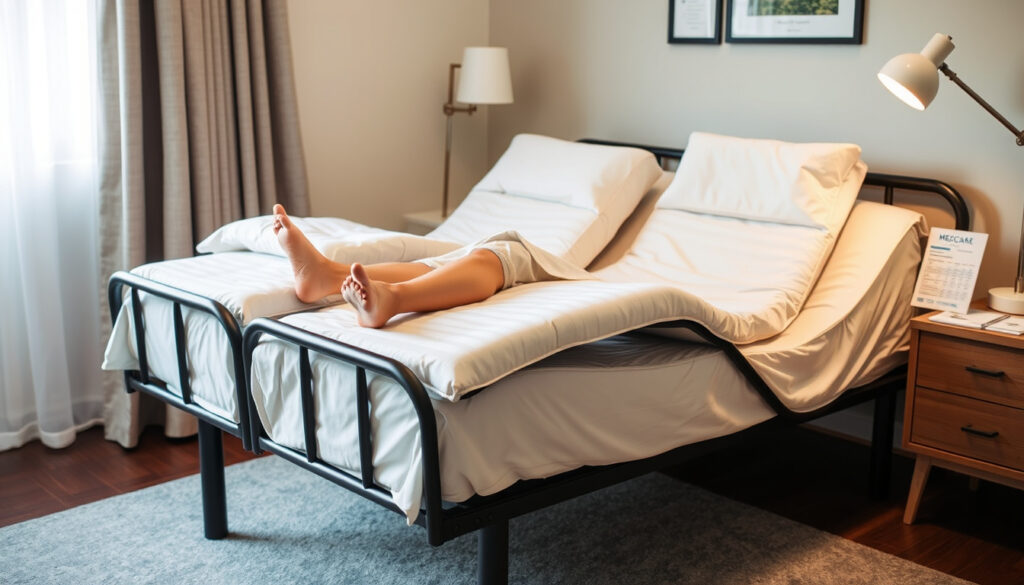
Adjustable Bed: Disadvantages, Medicare, and Elderly Options
You’ve probably landed here after a bit of a research rabbit hole, trying to untangle how adjustable beds work with the Australian health system. It’s a topic that mixes comfort, health needs, and a fair bit of financial confusion, especially for older Australians. The good news is that while the system isn’t always straightforward, there are clear paths to getting the right support, whether that’s through a government program or a private health fund. This guide cuts through the jargon to give you a practical, fact-based look at what’s really funded and what isn’t.
Key data point: Over 1,400 reviews on ProductReview.com.au show mixed user experiences with adjustable beds, particularly around durability.
| Feature | Key Fact |
|---|---|
| Medicare Coverage | Generally does not cover home-use adjustable beds for comfort; considered a household item. |
| Main Funding Source | Private health insurance extras cover, if the bed is part of a care plan. |
| Government Program | Victorian Aids and Equipment Program (AEP) offers subsidies; maximum $2,000 for beds. |
| NDIS Involvement | May fund via assistive-technology budgets if deemed necessary by a professional. |
| Key Restriction | Most bed frames are not compatible; mattress flexibility is critical. |
| Common Complaint | Noise during adjustment is a frequently cited drawback. |
Why Medicare Usually Isn’t the Answer
If you’re hoping Medicare will foot the bill for a home adjustable bed, the short answer is: it probably won’t. This is the first major hurdle most people face. Unlike a hospital bed that might be covered for a short-term clinical need, an adjustable bed for home use is generally classified by Medicare as a “household item”—something that provides comfort, not a cure. This distinction is the single biggest reason why funding falls through. While some consumer guidance might suggest coverage is possible if the bed is “medically necessary,” the clinical reality in Australia is that this is a rare exception, not the rule, and it would likely require being treated as specific durable medical equipment, a designation that’s hard to get for a home adjustable bed.
Instead, the practical pathways for Australians involve different systems entirely. The most common funded route is through private health insurance “extras” cover, where the bed is part of a care plan initiated by a health professional. This is a stark contrast to the US Medicare system, which is often what gets discussed in online forums. In Australia, the health funding landscape points you toward state-based schemes or the NDIS, not the federal Medicare program, unless you have a very specific clinical recommendation for a hospital-grade bed. It’s crucial to align your expectations with the Australian system rather than overseas advice you might read online.
Government Programs and the NDIS: What’s Real
For Australians, the financial help often comes from state-level initiatives. A prime example is the Victorian government’s Aids and Equipment Program (AEP). According to the Victorian government AEP guidelines, they provide subsidies for assistive technology, including beds. There is a listed maximum subsidy of $2,000 for certain pressure-reducing items, but there’s a critical cap to be aware of: a maximum subsidy of $1,070 every two years across all equipment categories in some cases. This means that while government help exists, it might not cover the full cost of a high-end electric adjustable bed that can cost significantly more.
For those with NDIS plans, the picture is more promising but still complex. Industry specialist DoAbility Australia notes that NDIS funding can cover adjustable beds when they are part of a participant’s “assistive technology” budgets, but only when an allied health professional, like an occupational therapist, has recommended it as “reasonable and supportive” of the participant’s functional needs. The key here is that it’s the *individual’s* plan and needs that determine funding, not the bed itself. Similarly, an Australian seller like Sleep Electric is a specialist manufacturer, suggesting they are a niche player. One source indicates that some sellers suggest adjustable beds may be funded through NDIS assistive-technology budgets when an occupational therapist recommends them, but this is not an automatic entitlement.
- Victorian AEP provides a maximum $2,000 subsidy per bed (sometimes less).
- NDIS funding requires a professional recommendation linking the bed to a functional need.
- Other options: private insurance, health savings accounts, veteran benefits.
Adjustable Bed Compatibility with Your Current Frame
Before you even start looking at funding, you need to look at your existing bedroom setup. The biggest misconception is that an adjustable bed can sit safely on top of any standard bed frame. The myth of the “adjustable bed in any bed frame” is just that—a myth. The structure of an adjustable base creates pressure points in the middle of the frame as it articulates. Over time, a standard frame without a center support rail can buckle under the mechanical stress, potentially voiding the base’s warranty. You have to ask yourself if the risk of a broken frame or a damaged floor is worth it.
The real solution lies in the mattress and the support system. For an adjustable base to work safely, the mattress must be flexible enough to bend without damage, and the frame must have adequate center support. Many users find that the most practical solution is to place the adjustable base directly on a low-profile platform or on the floor, bypassing the traditional frame entirely. If you insist on using your existing frame, you *must* verify that it has a center rail and that the mattress is rated for adjustable bases. Otherwise, you are potentially causing serious and expensive damage to your bedroom furniture.
Top Features for Elderly Users
If you’re over 65 or looking for a bed that addresses mobility issues, the features that matter shift from “luxury” to “necessity.” One of the most important is the presence of a pressure-reducing mattress, not just an adjustable base. Some medical sources highlight that pressure relief is a key benefit for those who spend long periods in bed. The base itself needs a remote control that is backlit and easy to use, and the motor should be quiet—noise is a common complaint. More importantly, consider the safety of the bed’s lowest height; it should be low enough for you to get in and out of bed with your feet flat on the floor, and high enough to make transfers from a wheelchair or walker easy.
Another critical aspect for elderly users is the “wall-hugging” function, which keeps the bed close to the bedside table when the head is raised, preventing items from falling. But the most vital feature post-purchase is the return and warranty policy. Given the health claims often attached to these beds—like improved circulation and reduced acid reflux—you need a trial period and a warranty that covers the motor and mechanism for a long time. The assembly is also a factor; many users report that delivery and setup are costly, and if you’re not handy, this adds a significant expense to the overall cost.
- Flexible mattress rated for adjustable bases.
- Programmable positions for reading, sleeping, and elevating feet.
- Dual-motor system for independent head and foot articulation.
- Backlit remote with large, tactile buttons.
- Zero-gravity presets and anti-snore modes.
The Victorian AEP has a maximum subsidy of $2,000 for a bed, but a high-quality electric adjustable bed can easily cost $3,000 to $5,000 or more, making the gap significant.
What the Research Says: Reviews and Complaints
When you start reading reviews, a pattern emerges. On ProductReview.com.au, a major Australian review aggregator, the conversation often centers on durability and after-sales service. While we don’t have an exact percentage of users who find them “not worth the cost,” a common thread in consumer forums is frustration with the initial price point versus the long-term reliability issues. The motors are usually the first thing to fail, and because the beds are heavy and complex, service calls are not cheap.
Here is a comparison of what is often praised versus what is criticized in the Australian market.
| Aspect | Positive | Negative |
|---|---|---|
| Comfort | Significant relief for back pain and circulation issues. | Requires a specific type of mattress to maximize comfort. |
| Cost | Can be covered by private health extras in some cases. | High upfront cost, often not covered by Medicare. |
| Durability | Some premium brands offer 10-year motor warranties. | Frequent reports of frame creaking and motor noise. |
| Ease of Use | Presets for “Zero Gravity” and “Anti-Snore” simplify positioning. | Remote controls can be complex for elderly users. |
The catch? A review from Sleep Electric, a specialty seller, claims that a key advantage is pain relief, but this claim is often not backed by broader clinical data. It is more honest to say that while many users *feel* relief, it’s not a medical treatment. The noise during adjustment, as noted in our research notes, is a frequently cited drawback. This is not a black-and-white purchase—it requires weighing physical comfort against financial cost and electronic reliability.
Steps to Buying If You’re Over 65
Buying an adjustable bed is a significant investment, and approaching it step-by-step prevents costly mistakes. This process is critical because it is not a standard retail purchase; it’s a health-related investment that requires professional input.
- Assess the Frame: First, measure your current bed frame and check for a center support rail. If there isn’t one, plan on removing the frame or buying a new base.
- Check Professional Options: Consult with a physical therapist or occupational therapist to verify if a pressure care or positioning mattress is needed.
- Verify Funding: If you are not in Victoria, check your state’s aids and equipment program. If you have private health cover, get a quote and ask about the “extras” portion of your coverage.
- Insist on a “No Lint” Trial: Never buy a bed without a 30-day minimum trial period. You won’t know if it helps your specific condition until you sleep on it.
- Understand the Warranty: Read the fine print. Does the warranty cover parts and labor in your home, or do you have to send the bed back?
Key Considerations for Seniors
When it comes to the frame, the trade-off is between a standard bed frame and the base itself. As we discussed, most standard frames are not designed for the torque of a motorized base. A flexible mattress is not just a recommendation; it’s a hard requirement. Not all mattresses work, so you must confirm the internal coils or foam are designed to flex. The right mattress prevents premature motor wear and ensures the base operates quietly.
Also, consider the availability of a “wall-hugging” feature. This prevents the bed from sliding away from the bedside table, which is a crucial safety feature for those who self-transfer from a wheelchair. The single most important thing to do is to have your physical needs assessed. This is not a furniture purchase; it’s a mobility aid. Government funding programs in Australia often require this documentation before they even consider an application. It’s the difference between buying a piece of furniture and investing in a medical device.
Summary
The path forward for an adjustable bed in Australia is not through Medicare, but through private health funds, state-based schemes like Victoria’s AEP, or a well-documented NDIS plan. Each of these avenues requires a professional recommendation, which has the dual benefit of ensuring the bed matches your medical needs while also unlocking potential funding. The financial risk is real, as is the risk of bed-frame incompatibility and motor noise. However, with proper planning and a strong focus on clinical need, an adjustable bed can be a valuable tool for comfort and independence in later years. The final decision rests on whether a professional assessment confirms the bed will meet your specific health needs enough to justify the cost and setup requirements.
calendar-australia.com, seniorsplus.com.au, sleepsophie.com.au, medicalnewstoday.com, sleepeazi.com.au, seniorsplus.com.au, sleeptite.com.au, motobility.com.au, backtosleep.com.au, doability.com.au
Frequently asked questions
Can you put an adjustable bed in any bed frame?
No, you cannot place an adjustable base on a standard bed frame without a center support rail. The articulation of the base puts pressure on the frame’s side rails and center, which can lead to cracking or warping. You need a frame with a center leg support system or you must place the base on a low-profile platform or the floor.
Does Medicare cover adjustable beds for seniors?
In Australia, Medicare generally does not cover home-use adjustable beds, classifying them as household comfort items. The government support instead comes from the state-based aids and equipment programs, private health insurance extras, or the NDIS, not the federal Medicare scheme.
Is an adjustable bed good for elderly people with arthritis?
Yes, many find them helpful because they can elevate the head and legs to relieve pressure on joints and improve circulation. However, it is not a cure, and the bed’s control ease and low height for entry/exit are critical features to consider for those with limited mobility.
What is the maximum subsidy for the Victorian AEP on a bed?
According to the AEP guidelines, the maximum subsidy for a bed is $2,000. However, this falls under a broader cap where the maximum subsidy for pressure-reducing items and equipment across all categories is $1,070 every two years in some cases, so the exact amount depends on the specific funding package.
What kind of mattress is required for an adjustable base?
You need a mattress that is flexible enough to bend without damage. A quality foam mattress, or a hybrid with coils specifically designed for articulation, is required. A standard spring mattress with a rigid box spring will not work and will be damaged, and it will also void the warranty on the base.
How long do adjustable beds typically last?
Consumer feedback suggests that while premium models with robust motor warranties can last 10 years or more, many users report issues with motor noise or frame creaking within the first few years of ownership, which impacts long-term value.
More related posts
 Jessica Fox: Career, Health Scare TECHNICAL_RETRY
 Alex Caruso: Hair Loss, Ethnicity, Lakers Trade & More
 Ethel Kennedy: Life, Children, and Human Rights Legacy
 Lou Sanders: Biography, Sobriety, ADHD, and Relationship Facts
 DJI Action 5 vs GoPro and Action 4/6: Is It Worth Buying
 Chace Crawford: Age, Height, Wife, Kids, and Career
 Victor Wembanyama Height: Growth Timeline and NBA Facts
 Big W Katoomba: Location, Hours, Stock & Shopping Guide
