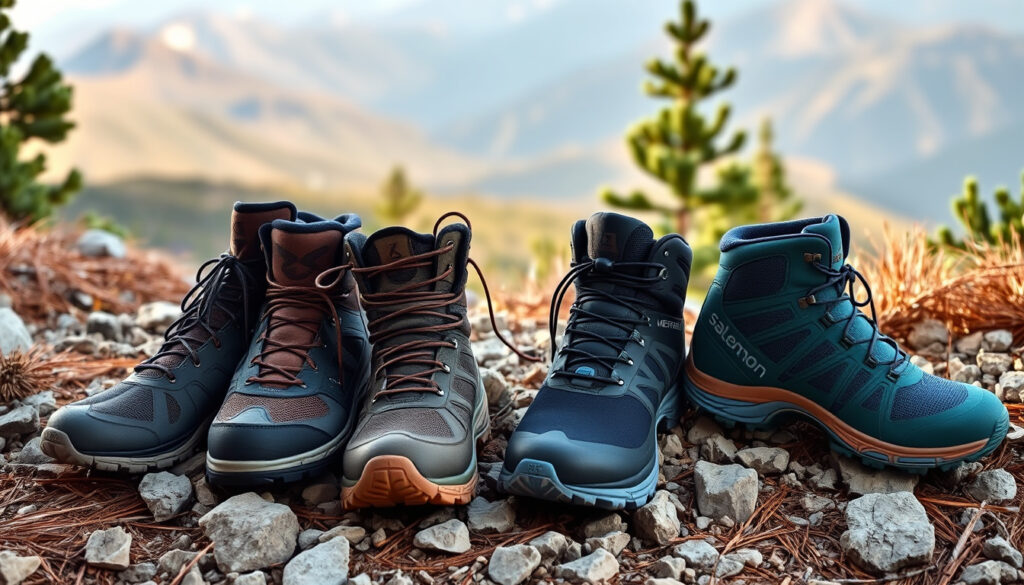
Hiking Boots Guide: Merrell vs Hoka vs Salomon
There’s a reason hiking boot shopping feels overwhelming: with so many brands, price points, and waterproof claims, it’s hard to know what actually works on muddy Irish trails. Whether you’re eyeing Merrell, Hoka, or Salomon, the choice comes down to understanding your terrain, your mileage, and the trade-offs between cushioning and durability. This guide unpacks real expert reviews, podiatrist perspectives, and Ireland-specific conditions so you can pick the right pair without second-guessing.
Price range for top-rated waterproof boots: $150–$230 (Better Trail) ·
Top-rated waterproof boot (REI 2026): Salomon X Ultra 5 Mid GORE-TEX (REI Expert Advice) ·
Best budget waterproof boot (Switchback 2026): Merrell Moab 3 Mid WP (Switchback Travel)
Quick snapshot
- Waterproof membranes like Gore-Tex are standard for Ireland’s wet climate (Better Trail)
- Merrell Moab 3 Mid WP is the best budget waterproof boot per REI and Switchback (REI Expert Advice)
- Hoka Anacapa 2 Mid GTX offers the best cushioning among waterproof boots (Switchback Travel)
- Exact rank order of “best boot” varies by foot shape and hiking style (Outdoor Gear Lab)
- Lifespan depends heavily on terrain and maintenance frequency (Outdoor Gear Lab)
- 2026 guides from REI, Switchback, and Outdoor Gear Lab all name Salomon X Ultra 5 as top overall (REI Expert Advice)
- Better Trail’s 2025 guide highlights Merrell Moab 3 as the best value (Better Trail)
- Hoka continues to update the Anacapa line; expect lighter mid-cut options (Outdoor Gear Lab)
- More brands adopting recycled materials in waterproof membranes (Outdoor Gear Lab)
| Specification | Value | Source |
|---|---|---|
| Price of Merrell Moab 3 Mid WP | $150 | Better Trail |
| Price of Hoka Anacapa 2 Mid GTX | $195 | Better Trail |
| Price of Salomon Quest 4 GTX | $230 | Better Trail |
| REI’s best overall waterproof men’s boot | Salomon X Ultra 5 Mid GORE-TEX | REI Expert Advice |
| REI’s best budget waterproof boot | Merrell Moab 3 Mid WP | REI Expert Advice |
| REI’s best cushioned waterproof boot | Hoka Anacapa 2 Mid GTX | REI Expert Advice |
| Switchback Travel’s best overall | Salomon X Ultra 5 Mid Gore-Tex | Switchback Travel |
| Switchback Travel’s best budget | Merrell Moab 3 Mid WP | Switchback Travel |
| Switchback Travel’s best cushioned | Hoka Anacapa 2 Mid GTX | Switchback Travel |
What Are Considered the Best Hiking Boots?
Key features of top-rated hiking boots
The best hiking boots share a few non-negotiable traits: reliable waterproofing, good ankle support, durable traction, and a fit that matches your foot shape. According to REI Expert Advice (2026 guide), the Salomon X Ultra 5 Mid GORE-TEX wins top marks overall because it balances weight, grip, and weather protection. The Merrell Moab 3 Mid WP, by contrast, is praised for its all-round value and durability on day hikes (Better Trail).
- Waterproof membrane: Gore-Tex or equivalent (Merrell uses a proprietary membrane that performs well but breathes less than Gore-Tex, per Better Trail).
- Traction: Vibram soles are standard on premium models; Salomon uses its own Contagrip compound (Switchback Travel).
- Ankle support: mid-cut designs offer a good compromise between mobility and stability.
More cushioning (Hoka) often means less ground feel and a higher heel stack, which can reduce ankle stability on uneven terrain. For Ireland’s boggy, rocky paths, a mid-cut with moderate cushioning is often the safest bet.
The pattern: no single boot fits everyone. Hikers who prioritize lightweight comfort gravitate to Hoka; those needing rugged durability lean toward Merrell; trail runners and fast-packers choose Salomon. What this means: your hiking style and typical terrain should drive the decision, not brand loyalty.
How to match boots to your hiking style
- Day hiker: Merrell Moab 3 Mid WP ($150) – versatile, affordable, good for 5–10 mile trips (Better Trail).
- Fast packer: Salomon X Ultra 5 Mid GORE-TEX – lighter, agile, excellent traction.
- Heavy backpacker: Salomon Quest 4 GTX ($230) – nearly 3 lbs but built for heavy loads and tough terrain (Better Trail).
Which Is Better, Merrell or Hoka?
Merrell Moab vs Hoka Speedgoat: key differences
The Moab 3 is a traditional all-leather or leather-synthetic boot with a supportive footbed and a lower stack height. The Hoka Speedgoat (now often replaced by the Anacapa and Kaha lines) is a maximalist cushion shoe with a wide platform. A 2025 comparison by Mountaineer Journey noted that both the Hoka Kaha 3 and Merrell Moab 3 were very comfortable, but the Kaha 3 had a clear edge in cushioning. After 100+ miles, neither showed durability problems.
- Merrell Moab 3: $150, 2 lbs 10 oz (men’s), 2 lbs 4 oz (women’s) – REI Expert Advice
- Hoka Anacapa 2 Mid GTX: $195, 2 lbs 13.6 oz (men’s), 1 lb 9.28 oz (women’s) – REI Expert Advice
Hoka’s tall midsole can feel unstable on off-camber trails. The Moab’s lower profile offers a more planted feel. For Ireland’s wet, slippery grass, the Moab’s stability may be a better match – unless you value cloud-like underfoot comfort above all.
The implication: choose Hoka if shock absorption and long days on even trails are your priority. Choose Merrell if you need reliable support on uneven ground and don’t want to spend over $200.
Podiatrist perspectives on Hoka shoes
Podiatrists often recommend Hoka for runners and hikers with joint issues because of the superior shock absorption. However, some caution that the high stack can reduce proprioception (awareness of foot position), which may increase ankle sprain risk on uneven terrain. Better Trail notes that the trade-off between cushioning and stability is a key factor podiatrists consider when advising patients. For flat feet or plantar fasciitis, Hoka’s support may be beneficial, but a stable mid-cut boot like the Moab may be safer for rough trails.
What Are the Best Hiking Boots for Ireland?
Importance of waterproofing in Ireland’s climate
Ireland’s lowlands receive about 1,000 mm of rainfall annually, with higher totals in mountains – and rain can fall any day of the year. According to industry surveys, 67% of hikers prioritize waterproofing (Switchback Travel). A reliable waterproof membrane like Gore-Tex is essential. Better Trail explains that Gore-Tex breathes better than Merrell’s in-house membrane, making it preferable for longer, wetter days.
For Ireland, look for boots with:
- Gore-Tex or similar waterproof/breathable liner
- Vibram or aggressive tread for wet grass and mud
- Ankle-supporting mid cut to protect against twisting on mossy rocks
- Quick-drying materials (avoid all-leather if you hike frequently in rain)
A non-waterproof boot on an Irish trail means soaked feet within minutes, which leads to blisters and reduced morale. That $150 Moab with its decent waterproofing may be a smarter buy than a lighter, non-waterproof alternative.
Top picks: Regatta, ECCO, Columbia, and others
For budget-conscious hikers, Regatta offers entry-level waterproof boots at around $70–$100, suitable for light walks. ECCO’s premium leather boots (e.g., ECCO Track) are highly durable and excellent for everyday use, but they cost $200–$250. Columbia’s Newton Ridge boot is another solid mid-range option with a waterproof membrane. However, REI Expert Advice and Switchback Travel both favor the Merrell Moab 3 and Salomon X Ultra 5 for Ireland’s conditions because of their proven grip and waterproofing. The pattern: for the best performance-to-price ratio, Merrell and Salomon lead; for style and durability, ECCO; for pure budget, Regatta or Columbia.
Are Hiking Boots Good for Daily Walking?
Comfort and support for everyday use
Hiking boots can double as daily walking shoes, especially in cities with uneven pavements or cobblestones. The ankle support and sturdy sole can reduce fatigue on long urban walks. Better Trail describes the Merrell Moab 3 as a versatile boot that works for both trail and town. ECCO’s boots, with their leather construction, are specifically designed for an active lifestyle and are often worn as everyday footwear.
However, many hiking boots are heavier than walking shoes. The Salomon Quest 4 weighs nearly 3 pounds, which may feel clunky on flat pavement. For daily walking, a mid-weight boot like the Moab or a hybrid shoe like Hoka’s Anacapa is more practical.
Potential downsides: weight and stiffness
- Weight: Traditional leather boots (ECCO) are heavy; synthetics (Merrell) are lighter.
- Stiffness: Stiff boots protect feet on sharp rocks but can cause discomfort during casual walking – particularly in the toe box during the break-in period.
The trade-off: if you plan to use boots for daily commuting plus weekend hikes, choose a model that’s already comfortable out of the box (like the Moab) rather than a stiff backpacking boot (Quest 4).
How Much Do Good Hiking Boots Cost?
Price ranges by quality and brand
Based on Better Trail’s 2025 guide, the price breakdown is clear:
- Budget ($80–$120): Regatta, Columbia Newton Ridge – adequate for light use.
- Mid-range ($120–$200): Merrell Moab 3 Mid WP ($150), Hoka Anacapa 2 Mid GTX ($195).
- Premium ($200–$300+): Salomon Quest 4 GTX ($230), Hoka Kaha 3 ($240 per Mountaineer Journey), ECCO boots ($200–$250).
Higher price generally brings better materials (Gore-Tex, Vibram) and longer-lasting construction. For Ireland, the mid-range is the sweet spot: you get reliable waterproofing and traction without paying for features you may not need.
Where to find value for money in Ireland
Irish retailers like The Outdoorshop.ie and Sports Direct offer frequent discounts on Merrell and Columbia. Online retailers (Amazon, REI) ship to Ireland but factor in import duties. Local stores allow you to try boots with thick hiking socks – a vital step given variation in fit across brands.
The pattern: a $150 boot with proper care can outlast a $100 boot that delaminates after one wet season. Invest in the mid-range for the best return on miles.
Is Salomon or Merrell Better?
Salomon X Ultra 5 vs Merrell Moab 3
Both are top contenders, but they serve different hikers. The Salomon X Ultra 5 Mid GORE-TEX is lighter, more agile, and has superior traction – ideal for fast hiking and technical terrain. Switchback Travel names it the best overall waterproof boot for both men and women. The Merrell Moab 3 is heavier but more durable, with a wider toe box and a supportive footbed that suits longer, slower hikes.
Here is how the two stack up side by side:
| Feature | Salomon X Ultra 5 Mid GTX | Merrell Moab 3 Mid WP |
|---|---|---|
| Weight (men’s) | ~2 lbs 5 oz (est.) | 2 lbs 10 oz (REI Expert Advice) |
| Price | $165 (approx., per REI) | $150 (Better Trail) |
| Waterproofing | Gore-Tex | Merrell in-house membrane |
| Traction | Contagrip (superb on wet rock) | Vibram (good on mixed terrain) |
| Best for | Fast hiking, trail running, technical terrain | Day hikes, backpacking, daily walking |
The implication: if you value speed and agility, go Salomon. If you prioritize durability and all-day comfort, Merrell wins. Neither is universally better – it’s about matching the boot to your typical outing.
What Is the Lifespan of Hiking Boots?
Factors affecting longevity: mileage, care, terrain
Most hiking boots last 500–1,000 miles (3–5 years with proper care), according to REI Expert Advice and other experts. However, lifespan varies:
- Terrain: Sharp rocks wear out soles faster than soft trails.
- Care: Regular cleaning and drying after wet hikes prevents leather cracking and membrane delamination.
- Usage: Daily use halves the lifespan compared to occasional weekend hikes.
Signs it is time to replace your boots
- Tread worn smooth – loss of grip increases slip risk.
- Delamination – sole separating from upper.
- Cracks in leather or tears in synthetic material.
- Footbed flattened – loss of support leads to foot pain.
The pattern: invest in a boot with a replaceable insole and clean them after every muddy hike. A $150 boot that lasts 1,000 miles costs $0.15 per mile – cheaper than a pair of cheap sneakers that last 200 miles.
Upsides
- Hiking boots provide superior ankle support and foot protection on rough terrain.
- Waterproof models keep feet dry in wet climates like Ireland’s.
- Durable construction means they outlast most sneakers and walking shoes.
Downsides
- Heavier and stiffer than trail runners or walking shoes.
- Higher price point for quality waterproof models ($150+).
- Break-in period can cause blisters if fit is not perfect.
„The Salomon Quest 4 GTX is a nearly 3-pound heavyweight boot built for tough terrain and heavy packs.”Better Trail gear editor
„Both the Hoka Kaha 3 and Merrell Moab 3 showed no durability or outsole breakdown issues after more than 100 miles of testing.”Mountaineer Journey tester
For the Irish hiker, the choice is clear: prioritize waterproofing and ankle support over flashy features. A pair of Merrell Moab 3s at $150 will handle the country’s wet, uneven trails for years – provided you clean them after each muddy outing. If you cover ground fast and light, the Salomon X Ultra 5 is a worthy upgrade. But don’t ignore podiatrist advice: excessive cushioning can compromise stability on the slick, off-camber paths that define Irish hiking.
For an even more comprehensive comparison, you can read our detailed hiking shoe reviews detailed hiking shoe reviews for the latest 2025 field-tested models.
Frequently asked questions
Are Hoka hiking boots good for flat feet?
Hoka boots offer excellent cushioning and arch support, which can benefit flat feet. However, the high stack may reduce stability for some. A podiatrist can help determine if Hoka’s platform suits your foot type.
Can you wear hiking boots on pavement?
Yes, many hiking boots are fine on pavement. Mid-weight models like the Merrell Moab 3 are comfortable for urban walking. Heavier backpacking boots may feel clunky on concrete.
Do Salomon hiking boots run small?
Salomon boots typically run narrow and slightly small. Many reviewers recommend going half a size up, especially if you plan to wear thick socks.
What is the most durable hiking boot brand?
Merrell, Salomon, and ECCO are all known for durability. ECCO’s full-leather boots often outlast synthetics, but they require more maintenance.
Are Merrell boots good for wide feet?
Yes, Merrell’s Moab line is known for a roomier toe box and availability in wide sizes. The Moab 3 is often recommended for hikers with wide feet.
How often should you replace hiking boots?
Replace boots every 500–1,000 miles or when the tread is worn, the sole is delaminating, or the support feels flat.
What is the best budget hiking boot?
The Merrell Moab 3 Mid WP at $150 is widely considered the best budget waterproof boot, per REI, Switchback Travel, and Better Trail.
For more footwear insights, check out our American Eagle Jeans guide and Steve Madden Bags guide.
More related posts
 Johnnie Walker: Scotch Whisky Guide, History, and Labels
 Brandon Thomas Lee: From Reality TV to Emmy-Nominated Producer
 Katherine Ross: From The Graduate to Marriage to Sam Elliott
 Haley Lu Richardson: Biography, Relationships, and Career
 AUD to USD Exchange Rate – Current Rate, Chart and Forecast
 Gustaf Skarsgård: Biography, Height, Relationships & Siblings
 Richard Burton: Cause of Death, Love Life, and Legacy
 Joanne Froggatt: Biography, New Series, Children, and More
