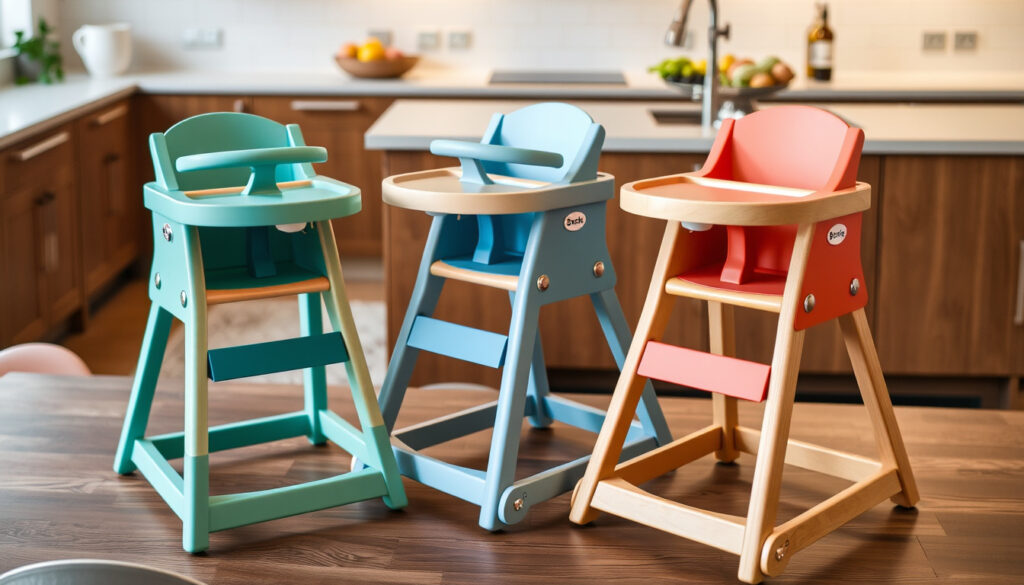
Stokke High Chair: Prices, Models and Value Guide
Stokke is the brand that high-chair research keeps circling back to—and for good reason. The Norwegian company’s Tripp Trapp grows with children from birth through adulthood, potentially justifying its premium price. But with models ranging from $179 to over $400, choosing the right one requires understanding what you’re actually paying for.
Main Model: Tripp Trapp · Age Range: Babies to Toddlers · Key Feature: Grows with Child · Shipping: Free on Official Site · Retailers: Tony Kealy’s, Mamas & Papas
Quick snapshot
- The Tripp Trapp supports use from birth to 242 pounds (Strolleria)
- All three models use the same baby set for the 6-month-to-3-year stage (Strolleria)
- The Clikk is the lightest option at 8.3 pounds with tool-free assembly (Strolleria)
- Exact regional pricing variations across different countries
- Long-term durability data beyond customer reviews
- Specific color availability dates for limited-edition finishes
- Current pricing shows consistent patterns across retailers since 2023
- Stokke maintains regular product line updates with seasonal color releases
- Potential expansion of sustainable material options in 2025
- Continued retailer-exclusive color offerings
| Attribute | Detail |
|---|---|
| Brand | Stokke |
| Flagship Product | Tripp Trapp |
| Target Age | Babies to Toddlers |
| Design Origin | Scandinavian |
| Official Site | www.stokke.com |
How Much Does a Stokke High Chair Cost?
Three distinct models mean three distinct price points, and the spread is wider than many parents expect. The Clikk starts at $179 for the base chair with tray included, while the Tripp Trapp and Steps require bundling purchases to match that completeness.
Price Ranges by Model
Stokke’s pricing structure reflects each model’s target audience and intended lifespan. The Clikk retails for $179 as a complete package—chair and tray bundled together. By comparison, the Tripp Trapp High Chair bundle costs $299–$349, though this includes the chair and baby set but not the tray, which sells separately for $65. The Steps High Chair costs $309 in its base configuration.
Complete bundles with all accessories tell a different story. The Tripp Trapp Complete Bundle reaches $399, while the Steps Complete Bundle costs $409. Even the Clikk with cushion bundle sits at $218. The difference? When same components are purchased, Clikk runs $110 lower than Tripp Trapp and $120 lower than Steps.
Clikk base price: $179 · Tripp Trapp base: $299–$349 · Steps base: $309
Factors Affecting Cost
Retailer choice makes a measurable difference. The lowest available price for Tripp Trapp High Chair 2 is $319.20 across multiple stores. Stokke’s own website currently lists Clikk at a discounted $151.20 from the original $189.00 price, representing a 20% discount that’s also visible on Babylist at the same price point.
The implication: families willing to comparison-shop can find meaningful savings, but the official site occasionally offers the best deals on older inventory.
Is the Stokke High Chair Worth the Value?
The Stokke price premium isn’t small—these chairs cost considerably more than most competitors. Whether the value justifies the spend comes down to how you calculate the investment over time.
Long-Term Durability
The Tripp Trapp’s lifespan specification tells the story: it supports use from 3 years old all the way up to 242 pounds. That’s adult seating built into a high chair design. The Steps maxes out at 187 pounds, while the Clikk tops out at approximately 33 pounds—essentially a toddler chair.
This means one Tripp Trapp can theoretically replace what would otherwise be multiple seating purchases. For families planning more than one child, that math improves further. The solid beech wood construction means these chairs don’t crack, peel, or degrade the way molded plastic chairs often do after a few years.
Compared to Alternatives
The Quality Edit analysis shows Stokke base High Chair at $319, with tray and cushion bringing total to approximately $419. Against that investment, competitors like Mockingbird offer similar functionality at lower price points, though they lack the Tripp Trapp’s decades of reputation.
What buyers are paying for with Stokke: the adjustable seat and footrest that grow with the child, the Norwegian design heritage, and the resale value. Used Tripp Trapp chairs regularly sell at 60–70% of original retail, meaning the real cost of ownership spreads across both years of use and eventual resale.
What this means: For families in smaller spaces or those uncertain about long-term use, the Clikk delivers Scandinavian design credentials at a fraction of the investment. For those planning to keep the chair through multiple children or want adult-family mealtime integration, the Tripp Trapp’s per-year cost becomes competitive.
Can You Use a Stokke High Chair for Newborns?
This is where the models diverge most significantly. Not all Stokke chairs are newborn-ready straight out of the box.
Newborn Compatibility
The Tripp Trapp can be used from birth to 6 months when paired with the Tripp Trapp Newborn Set. The Steps offers similar newborn capability through its Steps Bouncer attachment, also covering the birth-to-6-month range. The Clikk, however, cannot be used until approximately 6 months when the baby can sit upright independently.
The distinction matters for budget planning. A Tripp Trapp purchased for newborn use requires the separate Newborn Set accessory—adding to the initial investment but extending the chair’s functional range from day one.
Required Accessories
Once babies reach approximately 6 months, all three Stokke models share the same baby set and harness system. All three chairs can be used from 6 months to 3 years with this shared component, which creates some accessory interchangeability for families owning multiple Stokke chairs.
The catch: Families wanting to use the Clikk from birth simply can’t—there’s no compatible newborn attachment. This limits its appeal for parents seeking a single-chair solution from the start.
Parents who purchase the Tripp Trapp with the Newborn Set invest roughly $364–$414 total (chair + baby set + newborn set), but gain continuous use from birth. The Clikk at $179 works only from 6 months onward—making it a supplement rather than a complete solution for the earliest feeding stages.
What is the Stokke Clikk High Chair?
The Clikk entered the Stokke lineup as the brand’s answer to parents who wanted Scandinavian design credentials without the Tripp Trapp’s price tag or space requirements.
Key Features
The Clikk features tools-free assembly with only a few simple clicks—the naming isn’t accidental. The legs click in and out, allowing size reduction for travel or storage, which addresses a common complaint about bulkier high chairs. Clikk dimensions measure 27.2 inches length × 32.5 inches height × 22.1 inches width, making it reasonably sized but not compact in the traditional sense.
The chair brings Scandinavian design with easy-to-clean surfaces and quick assembly, targeting the practical parent who values aesthetics but doesn’t want assembly frustration. The Clikk can be used with or without Baby Set support and tray from the baby’s first meal through toddlerhood, adding flexibility as the child develops.
Differences from Tripp Trapp
Three critical distinctions separate these models. First, the Clikk seat height is not adjustable like Tripp Trapp—you get one seating position rather than the continuous adjustment that lets the Tripp Trapp adapt to table height as the child grows. Second, Clikk has fewer color and accessory options than other Stokke chairs, which may matter for parents prioritizing coordinated nursery aesthetics. Third, the lifespan difference is substantial: Clikk maxes out around age 3 or 33 pounds, while Tripp Trapp extends to 242 pounds.
At 8.3 pounds, Clikk weighs half of what the Tripp Trapp does at 15.4 pounds, making it more practical for households that need to move the high chair regularly or store it between children.
What is the Stokke Nomi High Chair?
The Nomi occupies a different design space within the Stokke family—it’s the option that prioritizes aesthetics alongside function.
Design Highlights
The Nomi features a distinctive modern silhouette that differentiates it from the more utilitarian Tripp Trapp and Clikk. The chair’s curved lines and contemporary proportions reflect current Scandinavian design trends, appealing to parents who view the high chair as a visible piece of furniture rather than a utilitarian tool.
Like other Stokke models, the Nomi emphasizes adjustability—but in its own way. The modern adjustable design allows the seat and footrest to adapt as the child grows, maintaining the ergonomic positioning that Stokke prioritizes across its lineup.
Usage Stages
The Nomi shares the core Stokke philosophy: supporting proper seated posture from first foods through toddlerhood. Like the Clikk, it works well at standard table height, bringing the child up to family meal level rather than requiring a separate tray surface.
Its table-side fit makes it particularly suitable for families who prioritize eating together rather than isolating the child at a lower table with a tray.
The pattern: The Nomi bridges the Tripp Trapp’s adjustability with a more contemporary visual identity. Parents choosing it are typically those who’ve ruled out the utilitarian look of traditional high chairs but still want the ergo-focused positioning Stokke is known for.
Stokke High Chair Comparison
Three Stokke models, three very different use cases. The table below puts specifications side by side so families can match priorities against what each chair actually delivers.
| Specification | Tripp Trapp | Clikk | Steps |
|---|---|---|---|
| Base Price | $299–$349 | $179 | $309 |
| Complete Bundle | $399 | $218 (with cushion) | $409 |
| Weight | 15.4 lbs | 8.3 lbs | 10 lbs |
| Newborn Use | Yes (with Newborn Set) | No | Yes (with Bouncer) |
| Min Age | Birth (with accessory) | 6 months | Birth (with accessory) |
| Max Weight Capacity | 242 lbs | 33 lbs | 187 lbs |
| Height Adjustable | Yes | No | No |
| Dimensions (L×H×W) | 19.3×31.1×18.1 in | 27.2×32.5×22.1 in | 14.7×15.9×17.3 in |
| Assembly | Tools required | Tool-free (click) | Tools required |
| Accessory Options | Extensive | Limited | Moderate |
Stokke High Chair Specifications
Five key specs tend to drive purchase decisions once families narrow down to the Stokke brand. Here’s how each model performs on the measurements that matter most in daily use.
| Spec Category | Tripp Trapp | Clikk | Steps |
|---|---|---|---|
| Age Range | Birth to adult (242 lbs) | 6 months to 3 years (33 lbs) | Birth to adult (187 lbs) |
| Seat Adjustment | Infinite positions | Fixed height | Fixed height |
| Footrest | Independent adjustable | Integrated fixed | Integrated adjustable |
| Portability | Heavy, stationary | Light, foldable legs | Moderate weight |
| Color Options | 12+ finishes | 6 finishes | 8 finishes |
| Resale Value | High retention | Moderate retention | High retention |
The trade-off: Tripp Trapp dominates on adjustability and lifespan but demands the highest upfront cost and permanent-ish placement. Clikk sacrifices long-term use for affordability and portability. Steps splits the difference with newborn capability and moderate weight.
Upsides
- Ergonomic design supports proper posture development from infancy
- Tripp Trapp and Steps grow with the child through adolescence
- High resale value protects long-term investment
- Shared accessory ecosystem across models
- Scandinavian design aesthetic across all three options
- Durable solid wood construction outlasts plastic alternatives
Downsides
- Higher upfront cost than most competitor high chairs
- Tripp Trapp is heavy (15.4 lbs) and difficult to move
- Clikk lacks newborn capability without exceptions
- Adjustable height only available on Tripp Trapp
- Limited color options on budget models
- Requires separate purchase of essential accessories (tray, newborn sets)
What Parents and Experts Say
“High chairs designed to grow with your child.”
— Stokke Official (product description)
“Ingenious Scandinavian design.”
— Tony Kealy’s (retailer product listing)
“The Tripp Trapp remains the benchmark for convertible high chairs, though the Clikk makes a compelling case for families with tighter budgets or space constraints.”
— Strolleria (high chair comparison review)
Stokke High Chair Summary
Stokke occupies a distinct position in the high chair market—it’s one of the few brands where a single purchase genuinely covers more ground than competitors. The Tripp Trapp’s ability to serve from birth through adulthood makes it the rational choice for families planning long-term use or multiple children. The Clikk democratizes Stokke design for families with tighter budgets or shorter-term needs, trading lifespan for portability. The Steps sits in between, offering newborn capability without Tripp Trapp’s full adjustability.
For families in the US, the value calculation is clear: those planning two or more children within a decade should strongly consider the Tripp Trapp despite the higher initial cost. Families with single children or uncertain timelines get solid ergonomics and design appeal from the Clikk at roughly half the price. Parents wanting newborn capability without Tripp Trapp’s bulk will find the Steps a reasonable middle path.
Related reading: Temple & Webster Store Locations · Harvey Norman Washing Machines
youtube.com, youtube.com, crateandbarrel.com, fromrebel.com, fromrebel.com
Frequently asked questions
Does the Stokke high chair grow with the child?
The Tripp Trapp and Steps do—these models adjust seat height and footrest position to match the child’s growth from approximately 6 months through adolescence. The Tripp Trapp supports users up to 242 pounds, while the Steps accommodates up to 187 pounds. The Clikk offers a fixed seat height and is designed for children up to approximately 3 years or 33 pounds.
Are Stokke high chairs safe for babies?
Yes. All Stokke high chairs meet relevant safety standards and include harness systems for the infant/toddler stages. The Tripp Trapp and Steps can be used from birth when paired with appropriate newborn accessories (Newborn Set for Tripp Trapp, Bouncer for Steps). The Clikk requires babies to be approximately 6 months old and able to sit upright independently before use.
What do reviews say about Stokke high chairs?
Customer reviews consistently praise Stokke chairs for build quality, longevity, and ergonomic design. The Tripp Trapp earns particularly strong marks for its adjustability and the fact that parents report children remaining comfortable in it through extended use. Common criticisms include the higher price point and, for Tripp Trapp specifically, the weight that makes moving it difficult.
How to choose the best Stokke high chair model?
Consider three factors: how long you need seating to last, whether you need newborn capability, and your budget. For children birth through multiple years: Tripp Trapp. For children 6 months through approximately 3 years: Clikk. For birth through school age with moderate adjustability: Steps. Each model serves distinct needs—there’s no universally “best” choice.
Is the Stokke high chair easy to clean?
The Clikk specifically receives praise for easy-to-clean surfaces designed for quick wipe-downs after meals. The Tripp Trapp and Steps feature smooth wood surfaces that wipe clean easily, though the multiple adjustment mechanisms require occasional attention to remove trapped food debris. Accessories like the baby set and trays are generally dishwasher-safe depending on the specific item.
What accessories come with Stokke high chairs?
Base packages vary by model. The Clikk includes the chair, tray, and Baby Set. The Tripp Trapp and Steps base bundles include the chair, Baby Set, and harness, but the tray is sold separately. Optional accessories include the Newborn Set, cushion, safety harness, and various color-matched accessories. Families should budget $50–$100 in accessories beyond the base chair price.
How adjustable is the Stokke high chair?
Only the Tripp Trapp offers infinite adjustability—the seat and footrest move independently to match the child’s proportions at any growth stage. The Clikk has a fixed seat height and integrated footrest with no adjustment capability. The Steps features an adjustable footrest but fixed seat height. This distinction is the primary functional difference driving Tripp Trapp’s premium price.
More related posts
 The Banshees of Inisherin: Meaning, Locations & Themes
 Chennai Super Kings vs Rajasthan Royals Match Scorecard – IPL 2024 Match 61 Stats
 John Mayer: Health, Sobriety, Relationships & Career
 Chad Michael Murray: Panic Attacks, Family & Career
 Enid Blyton: Controversy, Famous Books & Legacy
 Shane Lowry: Age, Wife, Net Worth, Religion & Career
 Mantra Mooloolaba Beach Guide: Rooms, Rates & Reviews
 Bankwest Broker Portal: Login, Features & Support for Brokers
