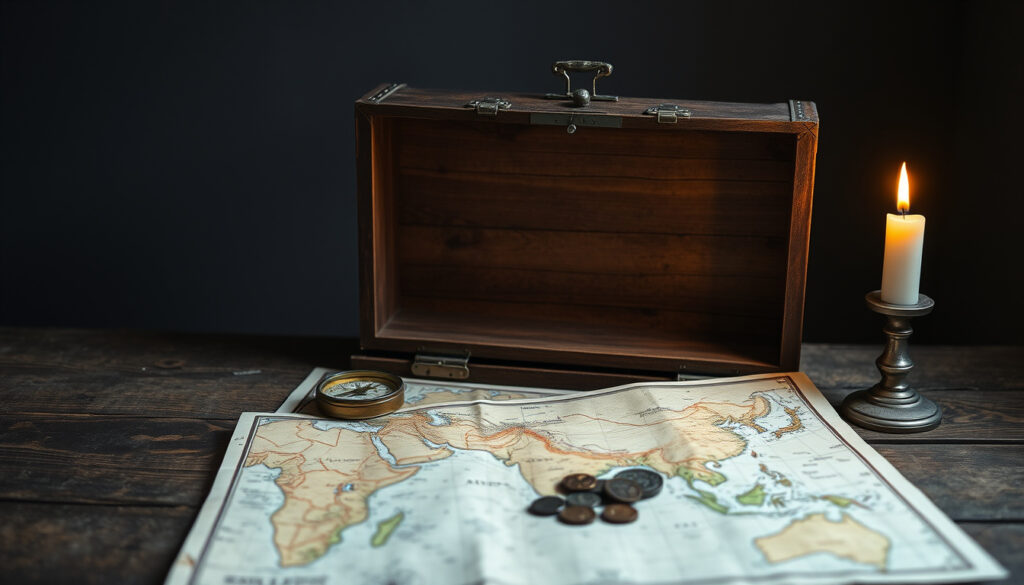
Marco Polo: Biography, Travels, and Lasting Legacy
Few names from the medieval world still evoke the same mix of curiosity and adventure as Marco Polo. The Venetian merchant’s 24-year journey across the Silk Road to the court of Kublai Khan didn’t just fill a book—it reshaped how Europeans imagined Asia. By the time he died in 1324, his tales had already begun to shift the course of exploration and trade.
Born: c. 1254, Venice (Republic of Venice) ·
Died: January 8, 1324, Venice ·
Journey: 1271–1295 (24 years) ·
Notable work: The Travels of Marco Polo (Il Milione) ·
Employer/Patron: Kublai Khan (Mongol Empire) ·
Main legacy: Introduced Europe to Central Asia and China
Quick snapshot
- Venetian merchant who traveled to China and served Kublai Khan (Encyclopaedia Britannica biographical entry)
- Dictated The Travels of Marco Polo while imprisoned in Genoa (Encyclopaedia Britannica) (Encyclopaedia Britannica biographical entry)
- Returned to Venice and died in 1324 (Encyclopaedia Britannica) (Encyclopaedia Britannica biographical entry)
- Had three daughters with Donata Badoer (Wikipedia family records)
- Whether Polo personally visited all the places he described (some accounts were hearsay) (Encyclopaedia Britannica on reliability)
- Exact route and duration of his missions in Mongol service (Wikipedia route uncertainty)
- Verified living descendants – no confirmed direct male line exists (Wikipedia lineage discussion)
- Birth c. 1254 → Departure 1271 → Arrival at Kublai’s court 1275 → Return 1295 → Imprisonment 1298 → Death 1324 (Encyclopaedia Britannica timeline)
- Ongoing scholarly debate over the accuracy of his accounts (Asia for Educators, Columbia University)
- Modern cultural references continue (Netflix series, board game, restaurant brand) (Wikipedia cultural impact section) (Asia for Educators, Columbia University)
Seven key facts, one pattern: Marco Polo’s life is unusually well-documented for a medieval traveler, yet the most important details—where exactly he went and how much he saw firsthand—remain contested.
| Attribute | Detail |
|---|---|
| Full name | Marco Polo |
| Occupation | Merchant, explorer, writer |
| Nationality | Venetian (Republic of Venice) |
| Birthplace | Venice, Italy |
| Deathplace | Venice, Italy |
| Notable work | Il Milione (The Travels of Marco Polo) |
| Era | Late 13th – early 14th century |
What is Marco Polo best known for?
What were Marco Polo’s travels?
Marco Polo was a Venetian merchant who, at around 17 or 18 years old, left Venice in 1271 with his father Niccolò and uncle Maffeo (Encyclopaedia Britannica account of his departure). The trio traveled the Silk Road to Asia, reaching the court of Kublai Khan in 1275 (Asia for Educators, Columbia University). He spent roughly 17 years in the Mongol Empire, serving as an envoy and traveling to places like Yunnan and possibly Myanmar (Encyclopaedia Britannica on his missions). He returned to Venice in 1295 via Hormuz and Constantinople (Encyclopaedia Britannica return route).
What is the significance of The Travels of Marco Polo?
His book, known in Venetian as Il Milione and in English as The Travels of Marco Polo, became a medieval bestseller (Encyclopaedia Britannica description as classic travel literature). Dictated to a fellow prisoner after Marco was captured in a naval battle near Genoa in 1298, the work provided Europeans with their first detailed look at the wealth, government, and geography of China and the Mongol Empire (Encyclopaedia Britannica on the book’s origin).
What are the most famous achievements of Marco Polo?
- One of the first Europeans to document a round-trip journey across the entire length of the Silk Road (Encyclopaedia Britannica).
- Served as an advisor and emissary to Kublai Khan, the Mongol ruler who controlled China (Encyclopaedia Britannica).
- His writings introduced Europeans to concepts like paper money, coal, and the imperial postal system (Wikipedia list of introduced concepts).
This bottom-line summary cements Polo’s role as a bridge between East and West.
How did Marco Polo change the world?
What was Marco Polo’s impact on European exploration?
Polo’s descriptions of Asia’s riches and advanced civilizations stirred European curiosity and desire for direct trade (Encyclopaedia Britannica on his influence). His book became a reference for merchants and mapmakers, helping to break down medieval myths about the East (Asia for Educators, Columbia University on impact).
How did Polo’s writings influence cartography and trade?
Medieval cartographers used Polo’s place names and distances to map Asia, notably on the Catalan Atlas of 1375 (Wikipedia on cartographic influence). Merchants used his route descriptions to plan new overland and maritime trade ventures, accelerating Europe’s commercial engagement with the East.
Did Marco Polo inspire Christopher Columbus?
Yes—Columbus owned a heavily annotated copy of The Travels of Marco Polo and used it to plan his own westward voyage (Encyclopaedia Britannica on Columbus’s copy). Polo’s mention of Japan (Cipangu) as a land of gold was one of the motivations Columbus had for seeking a sea route to the East.
Without Marco Polo’s writings, Columbus might never have convinced the Spanish crown that a westward voyage could reach Asia. Polo didn’t just report the world—he gave explorers a roadmap of imagination.
The pattern here is that Polo’s book transformed European geography and ambition.
Did Genghis Khan know Marco Polo?
What was the relationship between Genghis Khan and Kublai Khan?
Kublai Khan was the grandson of Genghis Khan, the founder of the Mongol Empire (Encyclopaedia Britannica on Kublai’s lineage). Genghis had died in 1227, decades before Marco Polo was born (c. 1254) (Wikipedia biographical timeline).
When did Genghis Khan die?
Genghis Khan died in 1227 (Wikipedia historical context). That places his death roughly 27 years before Polo’s birth.
Why could Marco Polo not have met Genghis Khan?
The timeline makes a meeting impossible. Marco Polo arrived at Kublai’s court in 1275—48 years after Genghis’s death. The Polo family served Kublai, not his grandfather.
Many people conflate Genghis and Kublai because both were powerful Mongol rulers. But Genghis never ruled China—Kublai did. Polo only encountered the grandson.
This historical detail corrects a common misconception about Polo’s timeline.
What did Marco Polo do to Kublai Khan?
What role did Marco Polo play in Kublai Khan’s court?
Marco Polo became a trusted envoy, carrying out diplomatic and fact-finding missions across the Mongol Empire (Encyclopaedia Britannica on his role). According to his book, Kublai was impressed by his intelligence and humility and appointed him as a foreign emissary (Wikipedia account of the appointment).
How did Marco Polo gain Kublai’s trust?
Polo’s fluency in several languages, his merchant training, and his willingness to travel to remote parts of the empire all contributed (Encyclopaedia Britannica on his skills). He also brought letters and gifts from the Pope, which helped establish credibility.
What missions did Polo undertake for the Khan?
- He visited Yunnan and probably Myanmar to report on customs and resources (Encyclopaedia Britannica on Yunnan mission).
- He traveled along the coast of China and possibly to India and Southeast Asia (Wikipedia list of missions).
- He served as a governor of a city for several years (according to some accounts) (Asia for Educators, Columbia University).
These missions indicate Polo’s trusted position in the Mongol administration.
Are there any living descendants of Marco Polo?
Did Marco Polo have any children?
Yes—he married Donata Badoer and had three daughters: Fantina, Bellela, and Moreta (Wikipedia family data). He also had a brother named Maffeo, but the Polo male line died out in Venice.
What happened to Marco Polo’s family?
After his death in 1324, his daughters carried on the name through marriage, but no direct male heir with the Polo surname survived (Wikipedia on his lineage). The Polo name disappeared in Venice within a few generations.
Is there any evidence of Polo’s lineage today?
Several individuals and families around the world claim descent, but no verified genetic or documentary proof exists (Wikipedia discussion of claims). The uncertainty makes it one of the open questions about his legacy.
Timeline of Marco Polo’s life and influence
Putting these events in chronological order clarifies the trajectory of Polo’s life and posthumous influence.
| Date | Event |
|---|---|
| c. 1254 | Birth of Marco Polo in Venice (Encyclopaedia Britannica) |
| 1271 | Polo family departs from Venice for Asia (Encyclopaedia Britannica) |
| 1275 | Arrival at Shangdu (Xanadu), Kublai Khan’s summer palace (Encyclopaedia Britannica) |
| 1275–1292 | Service in Kublai Khan’s court; travels across the Mongol Empire (Encyclopaedia Britannica) |
| 1292–1295 | Return voyage to Venice via Persian Gulf (Encyclopaedia Britannica) |
| 1295 | Arrival back in Venice (Encyclopaedia Britannica) |
| 1298 | Captured in naval battle; imprisoned in Genoa; dictates his book (Encyclopaedia Britannica) |
| c. 1300 | The Travels of Marco Polo circulated in manuscript form (Encyclopaedia Britannica) |
| 1324 | Death of Marco Polo on January 8 (Encyclopaedia Britannica) |
| 2014–2016 | Netflix series Marco Polo aired (Wikipedia on TV series) |
The timeline shows how Polo’s life events connect to his enduring impact.
Confirmed facts vs. what remains unclear
Confirmed facts
- Marco Polo was a Venetian merchant who traveled to China and served Kublai Khan (Encyclopaedia Britannica).
- His book was written while imprisoned in Genoa (Encyclopaedia Britannica).
- He returned to Venice and died in 1324 (Encyclopaedia Britannica).
- He had three daughters (Wikipedia).
What’s unclear
- Whether Polo personally visited all the places he described (some were hearsay from other travelers) (Encyclopaedia Britannica).
- Exact route and duration of his missions in Mongol service (Wikipedia).
- The existence of any verified living descendants (Wikipedia).
Voices through history: what contemporaries and successors said
“I have told only half of what I saw, for no one would have believed it.”
— Marco Polo, according to tradition (attributed in The Travels)
“The way of the Tartars is so well described by Marco Polo that I need not repeat it.”
— Francesco Balducci Pegolotti, 14th-century merchant handbook
“The said Marco Polo makes mention of many more islands than are shown on the ancient maps.”
— Marginal note in Christopher Columbus’s copy of The Travels
Summary: What Polo’s journey means today
Marco Polo’s story is more than a historical curiosity—it’s a case study in how one traveler’s account can literally redraw the world map. For modern readers and history students, the lesson is that first-hand reports, even with imperfect accuracy, can spark movements that reshape trade, exploration, and cultural understanding. For anyone studying the Silk Road or medieval globalization, the choice is clear: engage with Polo’s writings critically, or risk missing the foundation on which Western knowledge of Asia was built.
thomas-earnshaw.com, silk-road.com, youtube.com, cmrs.ucla.edu
For a deeper look at the controversies surrounding his accounts, see the ongoing debates about Marco Polos travels.
Frequently asked questions
When was Marco Polo born?
Marco Polo was born around 1254 in Venice, Republic of Venice (Encyclopaedia Britannica).
How long did Marco Polo’s journey take?
His round trip from Venice to China and back took 24 years, from 1271 to 1295 (Encyclopaedia Britannica).
Did Marco Polo meet Kublai Khan?
Yes, he arrived at Kublai Khan’s court in 1275 and served him for about 17 years (Encyclopaedia Britannica).
What language did Marco Polo write in?
He dictated his book in a Franco-Venetian dialect, which was then translated into Latin and other European languages (Wikipedia on language).
Is the Marco Polo Netflix series accurate?
The series takes dramatic liberties, but it is loosely based on his travels and service to Kublai Khan (Wikipedia on the series).
What is the Marco Polo game?
There are several games: a pool game called “Marco Polo” (a variant of hide-and-seek in water) and a board game based on his journey (Wikipedia cultural impact).
Who were Marco Polo’s parents?
His father was Niccolò Polo, a Venetian merchant; his mother died when he was young (Wikipedia family section).
For further reading, see our guides on Isaac Newton and Thomas Shelby for more historical and cultural insights.
More related posts
 Cristiano Ronaldo Jr.: Age, Height, Family, Career 2025
 Gemma Ward: Biography, Career, and Relationship with Heath Ledger
 Atlanta Hawks vs Pacers Match Player Stats | Recent Game Analysis
 Thomas Shelby: Peaky Blinders Fact vs Fiction Guide
 The Quiet Girl – Plot, Ending and Where to Watch
 DC vs GT: Head-to-Head Records & 2026 Match Thriller
 Mark Ruffalo Biography: Age, Net Worth, and Movies
 Gold Coast Accommodation – Best Places to Stay 2025
