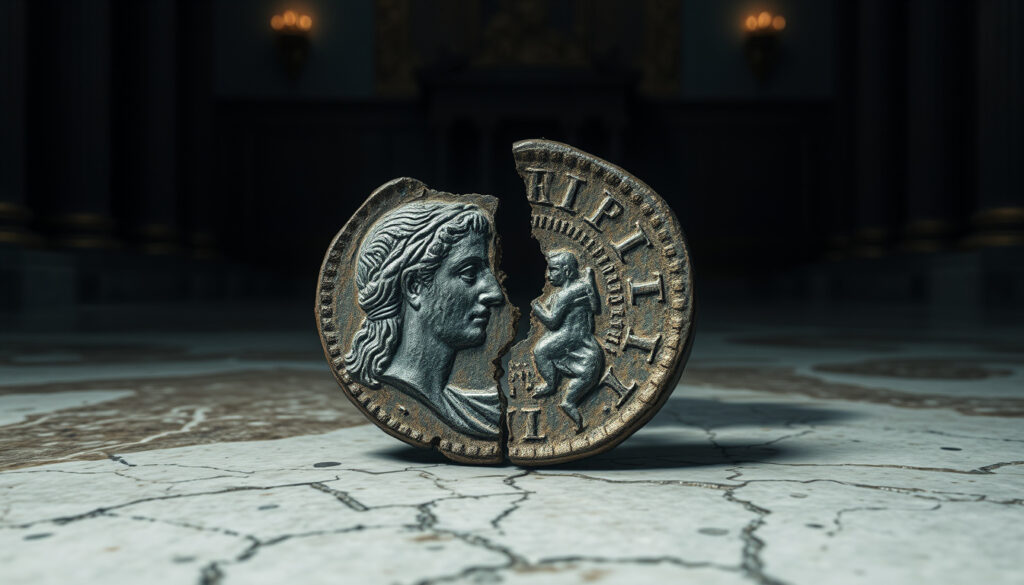
Two-Face: Origin, Psychology, and Moral Ambiguity of Harvey Dent
There’s something deeply unsettling about a villain who doesn’t choose evil — he leaves it to a coin. Harvey Dent was once Gotham’s brightest district attorney, a man who believed in justice. Then acid took half his face, and with it, his faith in fairness. This story traces how a single traumatic event shattered a promising life and created one of Batman’s most tragic foes.
First appearance: Detective Comics #66 (August 1942) ·
Creator: Bob Kane ·
Real name: Harvey Dent ·
Occupation: Former district attorney, criminal mastermind ·
Key trait: Obsession with duality and the number two ·
Signature weapon: Double-barreled .22 caliber pistol
Quick snapshot
- Harvey Dent is the alter ego of Two-Face (DC.com (official publisher))
- He uses a double-headed coin to make decisions (DC.com blog)
- His face was scarred on one side by acid (Wikipedia (community encyclopedia))
- Whether he is truly evil or a victim of circumstance (Wikipedia)
- The exact nature of his multiple personality disorder (Wikipedia)
- Whether his coin is truly random or biased (Arkham Wiki (fan community))
- First appearance: August 1942 (Wikipedia)
- Major revision: 1990’s The Eye of the Beholder (Wikipedia)
- Iconic film portrayal: 2008’s The Dark Knight (DC.com)
- Continued exploration in DC Rebirth (Wikipedia)
- Potential new film or television adaptation (Screen Rant (entertainment news))
- Deeper psychological analysis in fan and academic circles (Wikipedia)
Six key facts about Two-Face, one pattern: his story is a slow fall from grace, not a sudden leap into madness.
| Fact | Detail |
|---|---|
| Real name | Harvey Dent |
| First appearance | Detective Comics #66 (1942) |
| Creator | Bob Kane and Bill Finger |
| Affiliation | Batman’s rogues gallery |
| Signature weapon | Double-barreled pistol |
| Key trait | Obsession with duality and chance |
Why did 2 Face become a villain?
The traumatic scarring of Harvey Dent
Harvey Dent was Gotham’s successful district attorney before a criminal threw acid in his face during a trial. The attack disfigured the left side of his face and, according to Wikipedia (community encyclopedia), drove him into insanity. The original Golden Age story in Detective Comics #66 (August 1942) introduced the character as Harvey Kent, a name later changed to avoid confusion with Superman’s alter ego (German Wikipedia).
The role of acid and the criminal trial
In the 1946 newspaper strip version, a conceited actor named Harvey Apollo was scarred by a gangster, as noted by DC.com (official publisher). But the definitive origin — the acid attack at the trial of gangster “Boss” Moroni — was cemented in later comics. The 1990 story The Eye of the Beholder, cited by Wikipedia, retconned childhood abuse by Dent’s father as the root of his fractured psyche.
Psychological break and embrace of chance
After the scarring, Dent adopted the Two-Face identity and a double-headed coin to decide every action. DC’s blog calls the coin a “thematic trademark.” Modern interpretations, as summarized by Wikipedia, frame Two-Face as having dissociative identity disorder, with the coin flip representing the battle between his good and evil sides.
Harvey Dent didn’t become a villain because he was evil — he became one because a system he trusted failed to protect him. The coin is his way of outsourcing moral responsibility.
The implication: Two-Face’s origin is less about choosing crime and more about losing the ability to choose at all.
Is Two-Face a good or bad guy?
The duality of good and evil in Two-Face
Two-Face is driven by a split personality that represents both good and evil. His coin flip determines his actions, sometimes sparing innocent people. Despite these occasional moral choices, Wikipedia classifies him as a supervillain. Screen Rant (entertainment news) notes that he is consistently a criminal threat to Gotham.
Anti-hero or full villain?
Most sources, including Batman Wiki (fan community), describe his psychological profile as focused on dualism and chance after facial disfigurement. He is not an anti-hero; his crimes are deliberate, even if his methods are random. The coin’s “good” side may lead to mercy, but the “bad” side leads to murder.
Comparison with other Batman rogue gallery members
Compared to the Joker’s chaos or Riddler’s obsession, Two-Face’s ordered chance makes him a unique threat. Italian Wikipedia traces his conception to Bob Kane drawing from Jekyll and Hyde and The Phantom of the Opera, reinforcing the idea that he is a study in dual nature. For more on classic villain analysis, see Captain Hook: Origins, Portrayals, and Questions Answered.
Three portrayals, one pattern: the core of Two-Face remains the same — a man split between law and crime, justice and luck.
| Version | Origin | Moral alignment |
|---|---|---|
| Golden Age comics (1942) | Acid attack during trial | Villain with occasional mercy |
| The Long Halloween (1996-7) | Psychological unraveling after mob war | Tragic villain, formerly heroic |
| The Dark Knight (2008) | Joker’s manipulation and acid attack | Fallen hero turned vengeful criminal |
The implication: Two-Face is never entirely evil — his coin preserves a sliver of the Harvey Dent who once fought for justice.
Who was Two-Face in love with?
Gilda Dent: Harvey’s wife in the comics
Harvey Dent was married to Gilda Dent in the original comics. According to Wikipedia, Gilda left him after his disfigurement and turn to crime. In some versions, she is depicted as supportive but ultimately unable to cope with his transformation.
Other romantic interests in adaptations
In The Dark Knight, Harvey Dent is romantically involved with Rachel Dawes, whose death at the Joker’s hands pushes him over the edge. Screen Rant notes that this relationship deepens his tragedy. In other media, Two-Face has been linked to Selina Kyle (Catwoman) in some storylines, but these are less central.
The impact of his transformation on relationships
Two-Face’s obsession with duality extends to his love life. After his transformation, he views relationships through the lens of his coin — trust is a gamble. Wikipedia states that his condition makes sustained human connection nearly impossible.
Harvey Dent craved love and stability, but his trauma made him incapable of accepting either. The coin became his only consistent partner.
The pattern: every relationship Dent valued was destroyed by the same forces that created Two-Face.
Does 2 face hate the Joker?
The rivalry between Two-Face and the Joker
Two-Face and the Joker are both members of Batman’s rogues gallery, but they clash because of their opposing philosophies. The Joker’s chaotic nihilism contradicts Two-Face’s ordered chance. Wikipedia notes that they have fought each other in several storylines.
Shared history and differing philosophies
In some stories, the Joker is directly responsible for scarring Harvey Dent. In The Dark Knight, the Joker orchestrates the acid attack that creates Two-Face. DC.com confirms that the Joker’s manipulation is a key element of that film’s narrative. Two-Face holds a grudge and has attempted to kill the Joker in comics, seeing him as a perversion of his own belief in chance.
Examples from comics and films
In the 1990s storyline Batman: Two-Face (collected in Batman: The Long Halloween), the rivalry is personal. Wikipedia describes their relationship as “one of mutual contempt.” Two-Face’s hatred is not just for the Joker’s actions, but for how the Joker’s randomness mocks his own coin-based order.
Why does Two-Face hate Bruce Wayne?
Bruce Wayne’s role in Harvey Dent’s downfall
Harvey Dent was a close friend of Bruce Wayne and an ally of Batman. Wikipedia states that the modern origin cemented Dent as part of an alliance with Batman and Commissioner Gordon against Gotham crime. In The Dark Knight, Bruce Wayne personally funds Dent’s campaign for district attorney.
Perceived betrayal or failure to protect
Two-Face blames Batman for not preventing his scarring. In the comics, Wikipedia notes that he feels betrayed because Batman, his ally, failed to capture the assailant. In the film, this is even more explicit: Dent accuses Batman of failing to save Rachel Dawes.
The connection to Batman
Two-Face’s hatred is rooted in a sense of betrayal and loss of justice. He once believed in the system that Batman represented; now he sees it as a lie. DC.com emphasizes that Two-Face’s vendetta is deeply personal — he wants to prove that Batman’s code of justice is as flawed as any coin flip. For a parallel exploration of fictional psychology, see Bart Simpson: Age, IQ, Catchphrases, and Neurodiversity Debate.
Timeline signal
- August 1942: Two-Face first appears in Detective Comics #66 (Wikipedia)
- 1987: The Long Halloween storyline explores Harvey Dent’s transformation in depth (Wikipedia)
- 1995: Two-Face portrayed by Tommy Lee Jones in Batman Forever (DC.com)
- 2008: Aaron Eckhart plays Harvey Dent / Two-Face in The Dark Knight (DC.com)
- 2016: Two-Face appears in the DC Rebirth continuity (Wikipedia)
Clarity check
Confirmed facts
- Harvey Dent is the alter ego of Two-Face (DC.com)
- He uses a double-headed coin to make decisions (DC.com)
- His face was scarred on one side by acid (Wikipedia)
- He was originally a district attorney (Screen Rant)
- His coin is a thematic trademark (DC.com)
What’s unclear
- Whether he is truly evil or a victim of circumstance (Wikipedia)
- The exact nature of his multiple personality disorder (Wikipedia)
- Whether his coin is truly random or biased (Arkham Wiki)
Key quotes
“You either die a hero, or you live long enough to see yourself become the villain.”
— Harvey Dent, The Dark Knight (2008), as referenced by DC.com
“The coin decides.”
— Two-Face, recurring comic line, recorded by Wikipedia
“Harvey Dent was the best of us.”
— Batman, The Dark Knight (2008), as noted by DC.com
For fans of Batman’s rogues’ gallery, the lesson is clear: Harvey Dent is not a monster, but a man broken by a system that failed him — and his coin is a reminder that chance, not choice, rules the darkest corners of Gotham.
batman.fandom.com, cs.wikipedia.org, youtube.com, en.namu.wiki, medium.com
Frequently asked questions
What is Two-Face’s real name?
Harvey Dent. He was originally named Harvey Kent but changed to avoid confusion with Superman (German Wikipedia).
What is Two-Face’s coin?
A double-headed coin that he uses to make decisions. It was originally a lucky coin from his father (DC.com).
How does Two-Face make decisions?
He flips his coin. One side represents good, the other evil. He obeys the outcome without question (Wikipedia).
Who played Two-Face in The Dark Knight?
Aaron Eckhart portrayed Harvey Dent / Two-Face in the 2008 film The Dark Knight (DC.com).
What happened to Harvey Dent in the comics?
He was scarred by acid during a trial, later became Two-Face, and has been a recurring Batman villain ever since (Wikipedia).
Is Two-Face based on a real person?
No, but Bob Kane was inspired by The Strange Case of Dr Jekyll and Mr Hyde and The Phantom of the Opera (Italian Wikipedia).
Does Two-Face have any superpowers?
No. He relies on his twin pistols, his knowledge of the law, and his coin-flip decision-making (Wikipedia).
More related posts
 Madhuri Dixit Personal Life: Marriage, Children & Career Timeline
 Steve Madden Bags: Styles, Value & Authenticity Guide
 Brigitte Macron: Age, Children, Marriage, and Controversies
 Love Tilly Devine: Darlinghurst Wine Bar Menu, Reviews, Booking
 AUD to USD Exchange Rate – Current Rate, Chart and Forecast
 Taylor Sheridan: Net Worth, Costner Feud, All Shows
 Go Media Stadium Guide: History, Capacity, Events & Getting There
 Peter FitzSimons: Biography, Books, Weight Loss, Bandana
