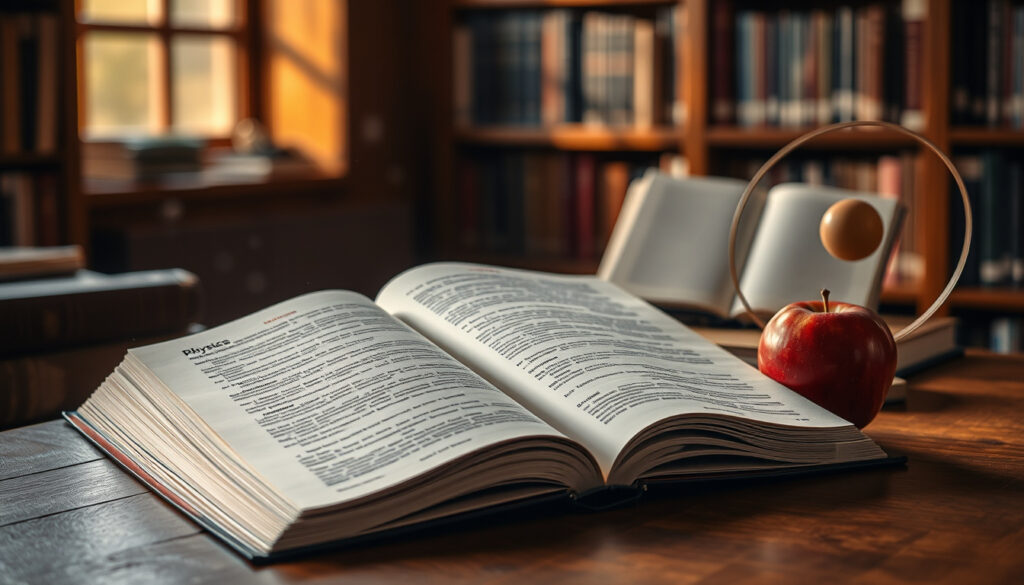
Isaac Newton: Laws of Motion, 2060 Prediction & Apple Myth
There’s a reason Isaac Newton’s name appears in nearly every physics textbook: his insights changed how we understand motion, light, and the universe itself. But the man behind the equations was far more complex than the ‘genius’ label suggests, with secret work on biblical prophecy and a famously short sleep schedule that still spark curiosity today.
Born: 4 January 1643 (NS) / 25 December 1642 (OS) ·
Died: 31 March 1727 (NS) / 20 March 1726 (OS) ·
Known for: Laws of motion, universal gravitation, calculus, reflecting telescope ·
Major work: Philosophiæ Naturalis Principia Mathematica (1687) ·
Title: President of the Royal Society (1703–1727)
Quick snapshot
- Newton was born on 25 December 1642 in Woolsthorpe, England (European Space Agency).
- He published the three laws of motion and universal gravitation in the Principia (1687) (Britannica).
- He built the first practical reflecting telescope in 1668 (Britannica).
- He served as President of the Royal Society from 1703 to 1727 (Space.com).
- The apple story may be embellished — Newton only mentioned the idea of gravity descending from a tree in his later years (Britannica).
- Newton’s precise IQ has never been measured; modern estimates range from 190 to 200 but remain speculative (New Scientist).
- His 2060 prediction may have been figurative, not a literal end-date (History.com).
- 1665–1666: Plague years — Newton developed calculus, gravity theory, and optics (European Space Agency).
- 1687: Principia Mathematica published (Britannica).
- 1705: Knighted by Queen Anne (Royal.uk).
- Historians continue to analyse Newton’s unpublished theological manuscripts (University of Cambridge).
- The 2060 date remains a topic of public fascination, with new archival research emerging (History.com).
- Modern physics still builds directly on Newton’s framework (NASA).
Eight key facts about Newton at a glance:
| Attribute | Detail |
|---|---|
| Full name | Sir Isaac Newton |
| Born | 4 January 1643 (NS) in Woolsthorpe, Lincolnshire, England |
| Died | 31 March 1727 (NS) in Kensington, Middlesex, England |
| Nationality | English |
| Education | Trinity College, Cambridge (BA 1665, MA 1668) |
| Known for | Newton’s laws of motion, universal gravitation, calculus, reflecting telescope, colour theory |
| Major awards | Fellow of the Royal Society (1672), Knight Bachelor (1705) |
| Institutions | University of Cambridge, Royal Society, Royal Mint |
What was Isaac Newton most famous for?
His laws of motion
- Newton’s first law (inertia): a body remains at rest or in uniform straight-line motion unless acted on by an external force (Britannica).
- Second law (F = ma): the change of motion is proportional to the applied force and occurs in the direction of that force (European Space Agency).
- Third law (action–reaction): for every action there is an equal and opposite reaction (Britannica).
Universal gravitation and the apple story
Newton stated that every particle of matter attracts every other particle with a force proportional to the product of their masses and inversely proportional to the square of the distance between their centers (Britannica). The famous apple anecdote — that Newton was inspired by watching an apple fall — is widely repeated, though Britannica notes it may have been embellished over time.
Invention of calculus
Newton independently developed fluxions, an early form of calculus, during his “annus mirabilis” of 1665–1666 (European Space Agency). His priority dispute with Leibniz is well documented, but both are credited today (Britannica).
Contributions to optics and the reflecting telescope
Newton built the first reflecting telescope in 1668 (Britannica) and later published Opticks (1704), in which he demonstrated that white light splits into spectral colours through a prism (European Space Agency). This work laid the foundation for spectroscopy.
The pattern: Newton’s scientific breakthroughs were not isolated — they formed a unified system that connected the motion of planets to the fall of an apple, and light to mathematics. That synthesis is what made him a giant.
Who predicted the world will end in 2060?
Newton’s biblical chronology
Newton wrote extensively about the Book of Daniel and the Book of Revelation, treating them as chronological puzzles (History.com). He believed the Bible contained a hidden timeline of world events.
The 2060 prediction in his manuscripts
In a private manuscript dated 1704, Newton calculated that the world would not end before 2060, and that this date could mark the start of a new age (University of Cambridge). The document was rediscovered in the 20th century.
Why Newton believed the world would end
Newton interpreted prophecies about the “end of days” metaphorically — he thought the world would undergo a global transformation, not a literal destruction (History.com). The 2060 date was partly based on his reading of the Book of Daniel’s “time, times, and half a time.”
Newton, the father of modern physics, spent more of his writing life on theology and alchemy than on science. His 2060 prediction is a reminder that his mind was never bound by a single discipline.
The implication: Newton’s biblical work does not diminish his scientific legacy but reveals a thinker who saw all knowledge as connected.
How many hours did Isaac Newton sleep a day?
Historical accounts of Newton’s sleep
Biographers describe Newton as sleeping only 4–5 hours per night, often working relentlessly through the night and taking short daytime naps (New Scientist). His housekeeper reportedly found him at his desk at all hours.
Newton’s daily routine at Cambridge and London
During his years as Lucasian Professor at Cambridge, Newton would sometimes forget meals entirely when deeply focused (Britannica). At the Royal Mint, he worked long hours investigating counterfeiters, adding to his sleep deficit.
Comparison with modern sleep science
Today’s sleep researchers recommend 7–9 hours for adults. Newton’s reported 4–5 hours is in the range of extreme short sleepers. Some studies suggest that brief, intense focus sessions — similar to Newton’s habits — can sometimes compensate for total sleep time, but the evidence is mixed (Sleep Foundation).
What this means: Newton’s sleep habits were a product of his extraordinary drive, not a blueprint for productivity.
What are 10 facts about Isaac Newton?
Early life and education
- Newton was born prematurely and survived — his father had died before his birth (European Space Agency).
- He attended The King’s School, Grantham before entering Trinity College, Cambridge in 1661 (Britannica).
- He became a Fellow of the Royal Society in 1672 (Space.com).
Scientific breakthroughs
- He developed the three laws of motion and universal gravitation (European Space Agency).
- He built the first practical reflecting telescope in 1668 (Britannica).
- He co‑invented calculus (with Leibniz) and discovered the binomial theorem (European Space Agency).
Unpublished interests and legacy
- Newton never married (Britannica).
- He served as Warden and later Master of the Royal Mint (Royal Mint).
- He was knighted by Queen Anne in 1705 (Royal.uk).
- He wrote more pages on theology and alchemy than on physics (University of Cambridge).
- He died in his sleep and was buried in Westminster Abbey (Westminster Abbey).
Why this matters: The “10 facts” list shows a man who wasn’t just a scientist — he was also a government official, a theologian, and a lifelong bachelor whose mind never stopped working. For more biographical portraits, see our profiles on Thomas Shelby: Peaky Blinders Fact vs Fiction Guide and Mark Ruffalo Biography: Age, Net Worth, and Movies.
What are the 3 laws of Newton?
Newton’s first law: inertia
An object remains at rest or in uniform motion in a straight line unless acted upon by an external force (Britannica).
Newton’s second law: F = ma
The net force on an object equals the product of its mass and acceleration, and the direction of the force is the same as the direction of the acceleration (European Space Agency).
Newton’s third law: action and reaction
For every action there is an equal and opposite reaction (Britannica). These three laws were published together in the Principia Mathematica in 1687 (Britannica).
Newton’s laws are not perfectly accurate in extreme conditions — at very high speeds or strong gravitational fields, Einstein’s relativity takes over. But for everyday situations, they remain the most practical toolset ever invented.
The pattern: Newton’s three laws form a complete framework for classical mechanics, one that engineers and physicists still use daily.
Timeline of Newton’s life
- : Born in Woolsthorpe, Lincolnshire (European Space Agency).
- : Matriculated at Trinity College, Cambridge (Britannica).
- : Plague years; developed calculus, gravity theory, and optics (European Space Agency).
- : Built the first reflecting telescope (Britannica).
- : Elected Fellow of the Royal Society (Space.com).
- : Published Principia Mathematica (Britannica).
- : Appointed Warden of the Royal Mint (Royal Mint).
- : Elected President of the Royal Society (Space.com).
- : Knighted by Queen Anne (Royal.uk).
- : Died in London; buried in Westminster Abbey (Westminster Abbey).
The pattern: Newton’s career accelerated rapidly after the plague years and kept building momentum through four decades of relentless output.
What’s confirmed, what’s unclear
Confirmed facts
- Newton’s birth and death dates are well documented (European Space Agency).
- His publication of the Principia in 1687 is a historical certainty (Britannica).
- His role as President of the Royal Society and work at the Royal Mint are proven by institutional records (Royal Mint).
What’s less certain
- The apple story is likely embellished – Newton only mentioned the idea in old age (Britannica).
- Newton’s IQ is pure speculation; no test existed in his time (New Scientist).
- Sleep-duration claims rely on second‑hand accounts, not diaries (Britannica).
- Whether his 2060 prediction was literal or symbolic remains debated (History.com).
The catch: Many popular stories about Newton rest on thin evidence, so separating fact from folklore requires careful sourcing.
Quotes from and about Newton
“I do not know what I may appear to the world, but to myself I seem to have been only like a boy playing on the seashore… finding a smoother pebble or a prettier shell than ordinary, whilst the great ocean of truth lay all undiscovered before me.”
– Isaac Newton, as quoted in David Brewster’s Memoirs of the Life, Writings, and Discoveries of Sir Isaac Newton (1855)
“Newton was not the first of the age of reason. He was the last of the magicians.”
– John Maynard Keynes, from his essay “Newton, the Man” (1946)
These two perspectives – Newton as humble explorer and as magician – capture the duality of a man who mixed rigorous science with esoteric inquiry. For modern readers, the lesson is that genius rarely fits a single label. For historians, the challenge is to keep both Newtons in view: the one who gave us calculus, and the one who hoped to decode the Bible’s last prophecy.
For a deeper look at the man behind the science, Isaac Newtons enduring impact is explored in greater detail in another biography.
Frequently asked questions
What was Newton’s personality like?
Newton was intensely focused, reclusive, and often quarrelsome. He had few close friends and never married. His single-minded dedication to his work was legendary (Britannica).
How did Isaac Newton die?
Newton died in his sleep on 31 March 1727 in Kensington, London. He had been suffering from kidney stones and other ailments. He was buried in Westminster Abbey (Westminster Abbey).
Was Isaac Newton religious?
Yes, deeply. Newton wrote extensively on Christian theology, though his private views were unorthodox – he rejected the Trinity and believed in a rational, orderly God (History.com).
Did Newton ever marry?
No, he never married. Some biographers suggest he was too absorbed in his work to form a romantic attachment (Britannica).
What is the controversy over the invention of calculus?
Newton and Gottfried Wilhelm Leibniz both developed calculus independently. A bitter priority dispute erupted, with Newton’s partisans accusing Leibniz of plagiarism. Today, most historians credit both men (Britannica).
How did Newton influence later scientists?
Newton’s methods and laws became the foundation of classical physics. Scientists like Albert Einstein, James Clerk Maxwell, and even modern space agencies (NASA, ESA) build directly on his work (NASA).
What is the significance of Newton’s Principia?
The Principia Mathematica is considered one of the most important scientific works ever written. It unified celestial and terrestrial mechanics under one mathematical framework (Britannica).
Where can I visit Newton’s birthplace?
Woolsthorpe Manor in Lincolnshire, now owned by the National Trust, is open to the public. Visitors can see a descendant of the famous apple tree (National Trust).
More related posts
 Best Free Video Editor: Compare Top 5 Online & Desktop Tools
 Best Free Stock Screeners – Top 2025 Tools for Traders
 Peter Brock’s Last Words, Crash, Net Worth, Estate
 Anton Yelchin Death: Accident, Lawsuit, and Key Lessons
 Noah Beck: TikTok Star, Age, Height, Dixie D’Amelio
 Aisha Tyler: Her Biography, Career, and Personal Life
 Oliver Cromwell: Biography, Controversies, and Legacy in Ireland
 Dale Thomas: Career, Nickname, Family, Net Worth & More
