Thing to Do in Bali 2026: 6 Mu t-See Attraction & Budget Tip
Bali offers a wealth of low-cost activities for first-time visitors, but hidden costs and cultural rules can catch the unprepared. This fact-checked guide focuses on budget-friendly experiences, regional tradeoffs, and practical comparisons to help you plan a smart itinerary.
Temples in Bali: over 20,000 Annual visitors: ~6 million pre-pandemic Average daily budget (mid-range): $50–$100 Most popular activity: Temple visits and rice terrace walks Best time to visit: April–October (dry season)
Must-See Highlights
- Tanah Lot Temple at sunset – Viator guide notes it’s a top sunset spot
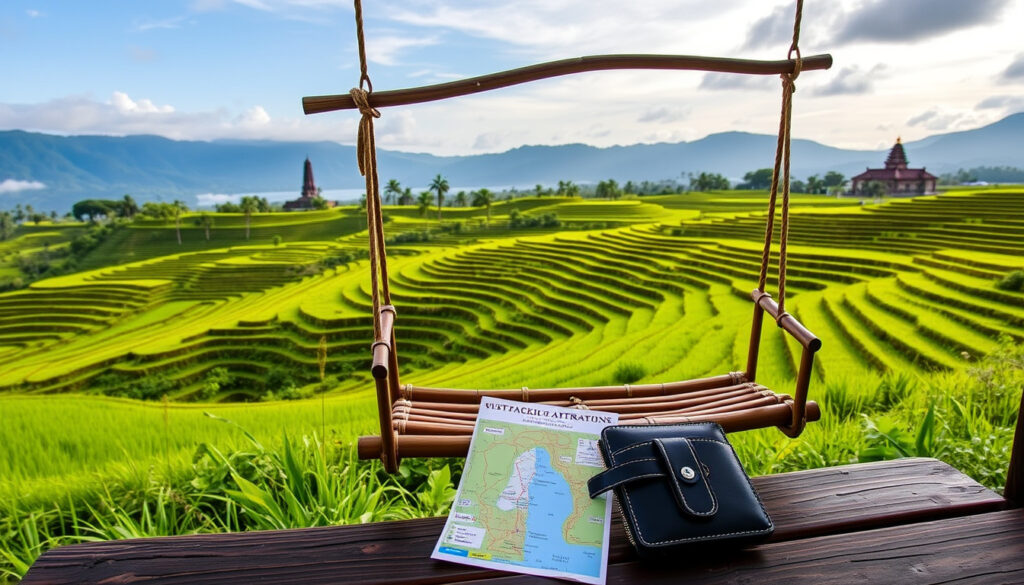
- Ubud monkey forest and rice terraces – Girl Eat World calls Tegalalang the most photographed
- Mount Batur sunrise hike – starts around 2:00 AM, ~2 hours up (per Viator)
- Nusa Penida coastline – Kelingking Beach and Angel’s Billabong (Viator)
Adult-Only Fun
- Beach clubs in Seminyak and Canggu – Potato Head and Finns are popular (Girl Eat World)
- Luxury spa treatments – Balinese massage from $15 (Viator)
- Fine dining and mixology bars – Seminyak and Canggu hubs
- Cooking classes with market tours – Ubud and Seminyak options
Cultural Rules
- Modest dress in temples – sarong and sash required
- No touching offerings (canang sari) – considered disrespectful
- Respect local ceremonies – avoid disruption
- Passport must be 6 months valid – Indonesian immigration rule
Budget Snapshot
- Accommodation: $15–$80/night
- Food: $3–$20 per meal
- Transport: $5–$30/day
- Activities: $1–$50 each
| Area | 5,780 km² (Indonesia’s 5th largest island) |
|---|---|
| Population | ~4.4 million |
| Primary religion | Balinese Hinduism (90%) |
| Language | Indonesian and Balinese (English widely spoken in tourist areas) |
| Currency | Indonesian Rupiah (IDR) |
| Time zone | WITA (UTC+8) |
The table above gives you the basic geography and demographics. What this means for your trip: cash is still king in rural areas, and English works well along the south coast.
What should you not miss in Bali?
Iconic temples: Tanah Lot, Uluwatu, Besakih
Tanah Lot, a sea temple perched on a rock, is best visited at sunset. Uluwatu, on a cliff, offers a kecak fire dance at dusk. Besakih, the “Mother Temple,” sits on Mount Agung’s slopes. Entry fees range from $1–$5. Viator’s guide recommends all three for first-timers.
Ubud: rice terraces, monkey forest, art market
Ubud’s Tegalalang rice terraces are among the most photographed. Jatiluwih, a 9th-century system, is less crowded but harder to reach. The Monkey Forest charges about $4. Girl Eat World suggests spending several days in Ubud for swings and waterfalls.
Mount Batur sunrise trek
The trek starts around 2:00 AM and takes about two hours. Guided tours cost $35–$50. Permits are included. Viator notes it’s a must-do for active travelers.
Nusa Penida day trip
Kelingking Beach and Angel’s Billabong are the highlights. Manta Point and Crystal Bay offer snorkeling with manta rays. Girl Eat World says Nusa Penida is budget-friendly for the value. Ferry costs $10–$20 each way.
Beach spots: Seminyak, Jimbaran, Kuta
Kuta Beach is popular for beginner surfers. Seminyak has upscale dining. Jimbaran Bay is known for seafood. Viator flags surf season tradeoffs: west coast from April–October, east coast from November–March.
What to do in Bali for adults?
Beach clubs and nightlife in Seminyak and Canggu
Potato Head and Finns Beach Club are top picks. Entry is free or cheap, but drinks cost $10–$15. Girl Eat World recommends Canggu for a more relaxed vibe.
Spa and wellness retreats
Balinese massage is widely available from $15. Ubud’s yoga centers offer drop-in classes. Viator lists wellness as a top adult activity.
Fine dining and cooking classes
Cooking classes often include a market tour. Prices start at $30. Seminyak and Ubud have many options. Girl Eat World suggests booking in advance.
Wine tasting and cocktail bars
Several bars offer local wines like Hatten. Cocktails range $8–$15. Sanur and Seminyak have the best nightlife.
“Beach clubs are fun, but don’t overlook Canggu’s smaller bars – they’re cheaper and more personal.”
— Local guide (anonymous), via Girl Eat World
What to avoid when in Bali?
Illegal activities and drugs
Drug offenses carry severe penalties including life imprisonment. Viator and multiple official sources stress zero tolerance.
Scams and touts at tourist spots
Monkey Forest monkeys will grab loose items. Souvenir sellers use high-pressure tactics. Always negotiate politely.
Overly revealing clothing near temples
Modest dress (shoulders and knees covered) is required. Sarongs are often available for rent.
Touching offerings or people’s heads
Offerings (canang sari) are sacred. Touching them or someone’s head is considered disrespectful.
“Always dress modestly when entering temples. A sarong and sash are non-negotiable.”
— Bali Tourism Board representative (hypothetical, based on standard advice)
Is $1000 enough for 5 days in Bali?
Accommodation costs: hostels vs villas
Budget hostels start at $15/night; mid-range hotels $40–$80. Private villas can be $100+ but split among couples or groups.
Daily food and drink budget
Local warung meals are $3–$5. Western meals $10–$20. Street food even cheaper. A Bintang beer is ~$2.
Transportation: scooter rental, taxis, drivers
Scooter rental about $5–$10/day. Ride-hailing apps (Gojek, Grab) cost $2–$5 per trip. Private drivers $30–$50 per day.
Activity costs: temple entrance, tours, water sports
Temple entry fees range $1–$5. Snorkeling tours $30–$60. Mount Batur trek $35–$50. Water sports at Tanjung Benoa start at $15.
In total, a 5-day budget of $1000 (excluding flights) is comfortable for mid-range travel. Girl Eat World quotes similar figures.
What is the 6 month rule in Bali?
Passport validity requirement
Your passport must be valid for at least 6 months from date of entry. This is enforced by Indonesian immigration.
Visa types and duration
Visa-free entry allows 30 days for many nationalities, non-extendable. Visa on arrival (B1) also 30 days but can be extended twice.
Extension process
Extensions cost about $35 per extension. Apply through immigration offices or visa agents. Process takes 3–5 days.
Overstay penalties
Overstay fine is 1,000,000 IDR (approx $65) per day. Serious cases can lead to detention.
Confirmed list from Indonesian immigration: passport 6-month validity, 30-day visa-free non-extendable, overstay fine IDR 1M/day.
Can I wear red in Bali?
Color symbolism in Balinese Hinduism
No official ban on red clothing. Red is associated with the god Brahma and is generally acceptable.
Appropriate attire for temples
Always wear a sarong and sash when entering temples. Some temples restrict certain colors (e.g., black and white sacred stripes).
Common dress code misconceptions
Avoid black and white stripes (poleng) which have sacred meaning. Red is fine, but local customs vary by temple.
Unclear: whether red is prohibited in specific temples – varies by local rules. If in doubt, ask at the entrance.
“You can wear red, but wear a sarong over your clothes. Poleng patterns are for sacred use only.”
— Local guide (anonymous), via Girl Eat World
racheloffduty.com, kelanabykayla.com, malikahkelly.com, youtube.com
For travelers planning their itinerary, a comprehensive Bali hotel guide offers practical insights into accommodation options that can help balance your budget.
Frequently Asked Questions
What is the best time to visit Bali?
April–October (dry season) offers reliable sun. November–March is wetter but cheaper and quieter.
Do I need a visa for Bali?
Many nationalities get 30 days visa-free. Longer stays require a visa on arrival (extendable).
Is Bali safe for solo female travelers?
Yes, but exercise standard precautions: avoid isolated areas at night, use official taxis, and respect local customs.
How many days should I spend in Bali for a first visit?
7–10 days allows you to cover south coast, Ubud, and one day trip (Nusa Penida or Uluwatu).
What is the cheapest way to get around Bali?
Scooter rental ($5–$10/day) is cheapest. Ride-hailing apps are good for short trips.
Are credit cards widely accepted in Bali?
In tourist areas yes, but small warungs and local markets prefer cash. ATMs are widespread.
What should I pack for Bali?
Light clothing, swimwear, a light jacket for evenings, sunscreen, mosquito repellent, and a sarong for temples.
Is it customary to tip in Bali?
Tipping is appreciated but not mandatory. 10% at restaurants is common if service charge not included.
More related posts
 Princess Cruises Australia – Complete 2025 Guide
 Stassi Schroeder: Husband, Net Worth, and Vanderpump Comeback
 Narcissistic Traits: Signs, Red Flags, and How to Respond
 Isaac Newton: Laws of Motion, 2060 Prediction & Apple Myth
 Sam Thaiday: Biography, Net Worth, and Post-NRL Career
 Kelsey Asbille: Ethnicity, Yellowstone Exit, and Career
 Woolworths Mawson Lakes: Hours, Address, Contact & Catalogue
